The architectural landscape of India is undergoing a profound transformation. As urban centers become more crowded and lifestyles more globalized, Indian homeowners are moving away from the heavy, ornamental façades of the past toward the sleek, sophisticated look of modern house elevation. Today’s homebuilders prefer clean lines, neutral palettes, and a minimalist aesthetic that prioritizes form and function over excessive decoration. While many homeowners spend hours curating digital galleries of beautiful façades, the challenge lies in translating those inspirations into a reality that fits a specific plot size, local climate, and construction budget.
👉 Design a Modern House Elevation That Reflects Your Style and Vision.
This guide serves as a practical handbook for navigating the nuances of contemporary design, covering everything from box-style geometries to the selection of durable façade materials. Understanding the financial implications of these choices is equally critical. To help you bridge the gap between vision and reality, Construction Estimator India provides professional services to estimate the realistic costs and quantities for your project. If you want to understand the budget impact of your design before finalizing your modern house elevation, contact Construction Estimator India on WhatsApp / Call +91 8630676890 for expert guidance.
What Makes an Elevation “Modern” in Indian Homes?
Core Visual Principles of Modern Elevation
At its heart, a modern house elevation design is defined by the philosophy of “less is more.” Unlike traditional Indian architecture that often features intricate carvings, heavy cornices, and rounded arches, modern design relies on straight lines and geometric clarity. The façade is viewed as a composition of volumes rather than a flat surface to be decorated. One of the most striking features of this style is the use of “cantilevers“—slabs or rooms that project outward without visible support—creating a sense of lightness and architectural drama.
Strong alignment is another hallmark of the modern look. In a well-designed contemporary façade, the windows, doors, and structural frames are meticulously aligned to create a rhythmic, organized appearance. There is a deliberate balance between “solids” (brick or concrete walls) and “voids” (large glass windows or open balconies). This interplay, combined with a focus on high-quality finishes rather than surface-level ornaments, ensures that the building looks architecturally significant from every angle.
Shift from Traditional to Modern: Short Example
Consider a typical traditional Indian house with heavy sloping roofs, rounded balcony railings, and bright, contrasting wall colors. To transform this into a contemporary house elevation, an architect would first simplify the roofline, perhaps replacing the slope with a clean, flat parapet or a sleek butterfly roof. The rounded railings would be swapped for toughened glass or minimalist metal sections. By reducing the color palette to neutral tones and emphasizing the vertical or horizontal lines through simple grooves in the plaster, the entire character of the building shifts from “old-world” to “modern-chic.”
The table below provides a comparison of the primary modern elevation styles trending in India to help you identify which direction aligns with your preferences.
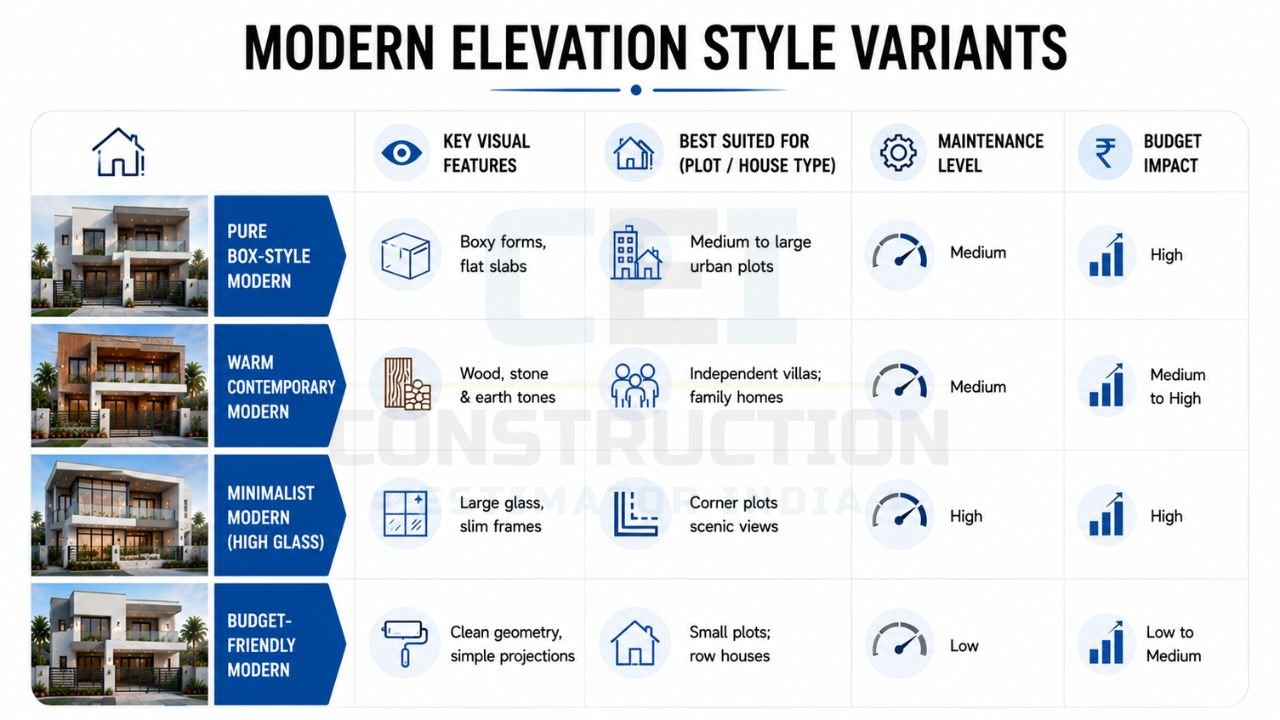
| Modern Elevation Style Variant | Key Visual Features | Best Suited For (Plot/House Type) | Maintenance Level | Budget Impact |
|---|---|---|---|---|
| Pure Box-Style Modern | Sharp rectangular forms, interlocking volumes, flat slabs. | Medium to large urban plots; double floor builds. | Medium | High (due to structural complexity) |
| Warm Contemporary Modern | Modern lines mixed with wood-look panels, stone, and earth tones. | Independent villas; multi-generational family homes. | Medium | Medium to High |
| Minimalist Modern (High Glass) | Slim frames, large glass expanses, very light neutral colors. | Corner plots or homes with scenic views. | High (frequent cleaning) | High (glass and framing costs) |
| Budget-Friendly Modern | Clean geometry, strategic paint use, simple projections. | Small plots; row houses; low budget modern elevation. | Low | Low to Medium |
Homeowners can use this comparison to narrow down their aesthetic goals. If you are building on a tight urban plot, the Pure Box-Style or Budget-Friendly options are often the most practical, whereas the Warm Contemporary style is perfect for those who find minimalist designs a bit too “cold.”
👉 Get a Custom Modern House Elevation Designed for Your Dream Home.
Modern Elevation Styles for Different House Types
Pure Box-Style Modern Elevation
The box-style elevation in India is perhaps the most recognizable modern trend. It involves treating the house as a series of stacked or interlocking cubes. By varying the depth of these boxes, architects create deep shadows that provide natural cooling and visual interest. This style often uses white or light grey as a base, with one “box” highlighted in a contrasting material like charcoal grey paint or slate stone cladding. It works exceptionally well for double-floor city plots where horizontal space is limited but verticality can be celebrated.
Warm Contemporary Modern Elevation
For many Indian families, a purely minimalist home can feel uninviting. The warm contemporary style bridges this gap by maintaining the clean, straight lines of modernism but introducing textures that feel “homey.” This is often achieved by adding high-pressure laminate (HPL) panels with a wood finish to the underside of balconies or creating a feature wall with terracotta-colored stone. This style respects modern principles while acknowledging the traditional Indian preference for warmth and texture, making it a favorite for double floor modern elevation projects.
Minimalist Modern Elevation with Higher Use of Glass
This style is about transparency and lightness. It features large, floor-to-ceiling windows and glass balcony railings that make the boundary between the interior and exterior disappear. While visually stunning, this approach requires careful planning in the Indian climate to avoid excessive heat gain. To maintain privacy while keeping the glass aesthetic, many homeowners use frosted glass or integrate sleek metal louvers that allow light in while blocking the view from the street. If you are considering a glass-heavy design, Construction Estimator India can help you check the quantity and cost of specialized toughened glass and aluminum frames required for such a façade.
Budget-Friendly Modern Elevation
A low budget modern elevation does not have to look “cheap.” It relies on “proportional design” rather than expensive materials. By ensuring that windows are perfectly aligned and using a sophisticated two-tone paint scheme—such as off-white with a single dark grey vertical band—a house can look high-end. Simple MS (Mild Steel) railings with clean vertical bars are used instead of glass, and visual interest is created through “grooves” cut into the plaster, which cost very little but add significant architectural character.
Openings, Balconies, and Lines in Modern Elevation
Aligning Windows, Doors, and Frames
The secret to a professional-looking modern front elevation lies in the hidden grid. In modern design, windows aren’t just holes for light; they are part of a larger geometric pattern. Architects often align the top edge of the ground-floor windows with the top edge of the main door, and then carry that line up to the first floor. When windows are scattered randomly based only on internal room needs, the exterior feels chaotic. A modern approach ensures that even if windows are of different sizes, they follow a common vertical or horizontal axis.
Balcony Shapes, Depth, and Railings
In contemporary design, balconies are treated as structural extensions of the house’s internal volumes. Instead of the curved, decorative balconies of the 1990s, modern balconies are typically deep, rectangular slabs. The choice of railing is the “jewelry” of the elevation. Glass railings provide a seamless, premium look, while CNC-cut metal screens offer a more artistic, patterned appearance. The depth of the balcony is crucial; a deep cantilever creates a bold shadow line that defines the small modern house elevation, giving it a three-dimensional look that flatter designs lack.
Horizontal and Vertical Lines as Design Tools
Lines are used to guide the eye and change the perceived scale of a building. Horizontal bands can make a narrow house look wider, while vertical fins—often made of concrete, metal, or wood—can make a single-storey house appear taller and more majestic. These lines provide structure without the need for traditional ornamentation. For instance, a single vertical concrete “fin” that runs from the ground to the terrace can serve as a powerful focal point, anchoring the entire design.
The following table compares different material mixes used in modern façades, helping you understand their visual and financial trade-offs.
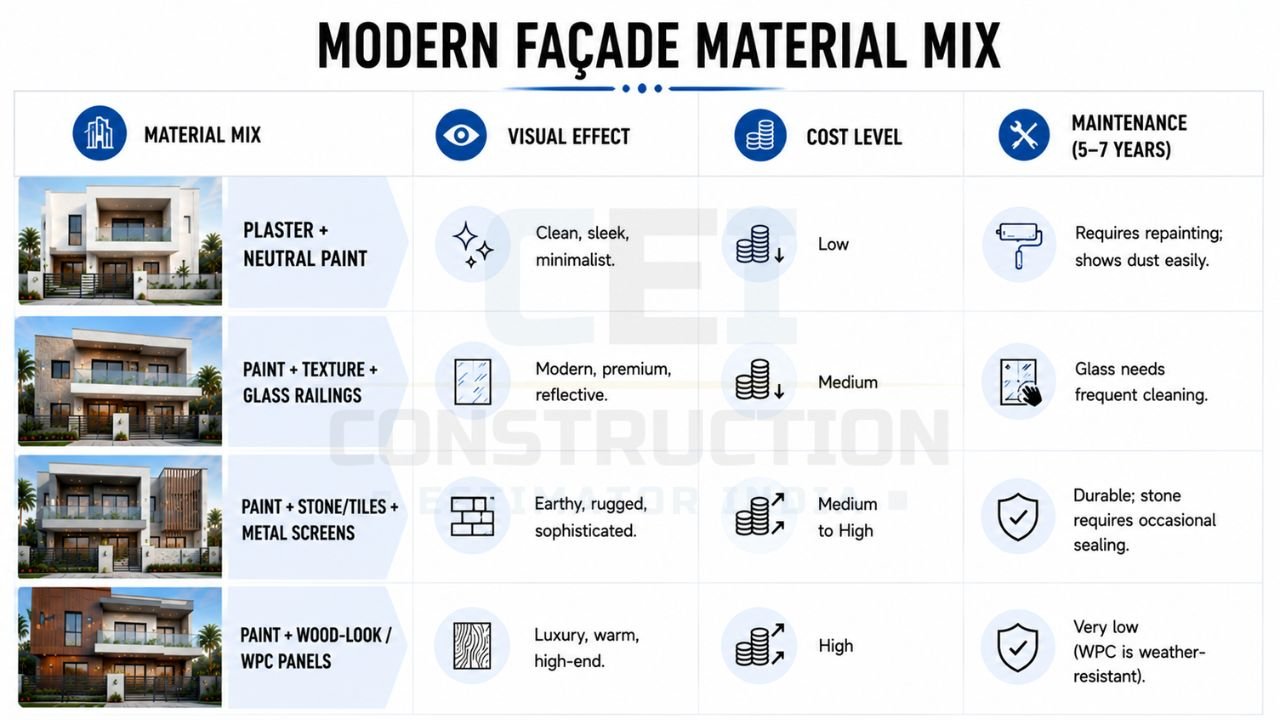
| Modern Façade Material Mix | Visual Effect | Approximate Cost Level | Maintenance Over 5–7 Years |
|---|---|---|---|
| Plaster + Neutral Paint | Clean, sleek, minimalist. | Low | Requires repainting; shows dust easily. |
| Paint + Texture + Glass Railings | Modern, premium, reflective. | Medium | Glass needs frequent cleaning. |
| Paint + Stone/Tiles + Metal Screens | Earthy, rugged, sophisticated. | Medium to High | Durable; stone requires occasional sealing. |
| Paint + Wood-look / WPC Panels | Luxury, warm, high-end. | High | Very low (WPC is weather-resistant). |
This table allows homeowners to choose materials based on their long-term commitment to maintenance. For instance, while WPC (Wood Plastic Composite) panels have a higher initial cost, their low maintenance makes them a smart investment. To understand the cost difference between basic elevation vs modern cladding and glass railings, you should reach out to Construction Estimator India for a detailed comparison tailored to your plan.
👉 Build a Modern Home That Combines Style, Functionality, and Elegance.
Modern Materials, Colours, and Texture Choices
Typical Modern Façade Material Combinations
The success of a modern house elevation design depends heavily on how materials are layered. A popular combination in India today is the mix of “rough” and “smooth.” For example, a large expanse of smooth, white-painted wall might be paired with a small section of rough, grey stone cladding or a textured cement-finish panel. This contrast adds depth and prevents the minimalist design from looking flat or boring. Metal is also a key component, with powder-coated aluminum or steel used for pergolas and privacy screens to add a “high-tech” touch.
Colour Palettes for Modern Elevations
Modern color strategy is often built around a “base” and an “accent.” Neutral base tones like crisp whites, soft greys, beiges, and taupe are used for the majority of the surface area. These colors reflect India’s strong sunlight, keeping the building cooler. Accents are then used sparingly—perhaps a charcoal grey for window frames, a deep navy for a recessed wall, or a natural wood tone for the main entrance. This disciplined use of color creates a sophisticated “European” look that stays relevant for decades, unlike the bright, multi-colored trends of previous years.
Climate and Maintenance in Modern Elevation Materials
India’s climate—marked by heavy monsoons, intense heat, and high dust levels—is a major factor in material selection. Dark colors, while trendy, can absorb significant heat, making interiors warmer. Large expanses of glass, if not strategically shaded by cantilevers or “chajjas,” can turn a living room into a greenhouse. Furthermore, dusty environments can make glass and high-gloss tiles look dirty very quickly. Construction Estimator India helps homeowners by estimating long-term maintenance and repainting costs, ensuring that the “modern look” you choose today is one you can afford to maintain five years from now.
Modern Elevation for Different Plot Sizes and Storeys
Small Modern House Elevation on Narrow Plots
On narrow plots, typically found in densely packed Indian cities, the goal is to create “visual width.” This is done by using horizontal elements like long, sleek balconies or horizontal grooves in the plaster. A small modern house elevation often features a single, tall vertical element, like a stone-cladded staircase block, to draw the eye upward and give the house a grander presence. By keeping the color palette light and the window frames slim, the house feels airy rather than cramped.
Double Floor Modern House Elevation
A double floor modern elevation offers the most creative freedom. Architects can use “stacking” techniques, where the first floor is slightly offset from the ground floor, creating an interesting overhang. Continuous lines are essential here; for instance, a vertical panel of HPL might start at the ground floor and wrap around the first-floor balcony, visually tying the two storeys into a single, cohesive architectural statement. This “wrapping” effect is a signature of high-end contemporary design.
Corner and Row House Modern Elevations
Corner houses are unique because they have two “fronts.” A modern design for a corner plot must be “L-shaped,” with the design language flowing seamlessly around the corner. If the front has a box-style projection, that projection should ideally wrap around to the side to maintain consistency. For row houses, modern design is used to create a distinct identity within a repetitive streetscape. By using a unique “frame” or a specific color accent, a single row house can stand out as a modern masterpiece while still respecting the neighborhood’s scale.
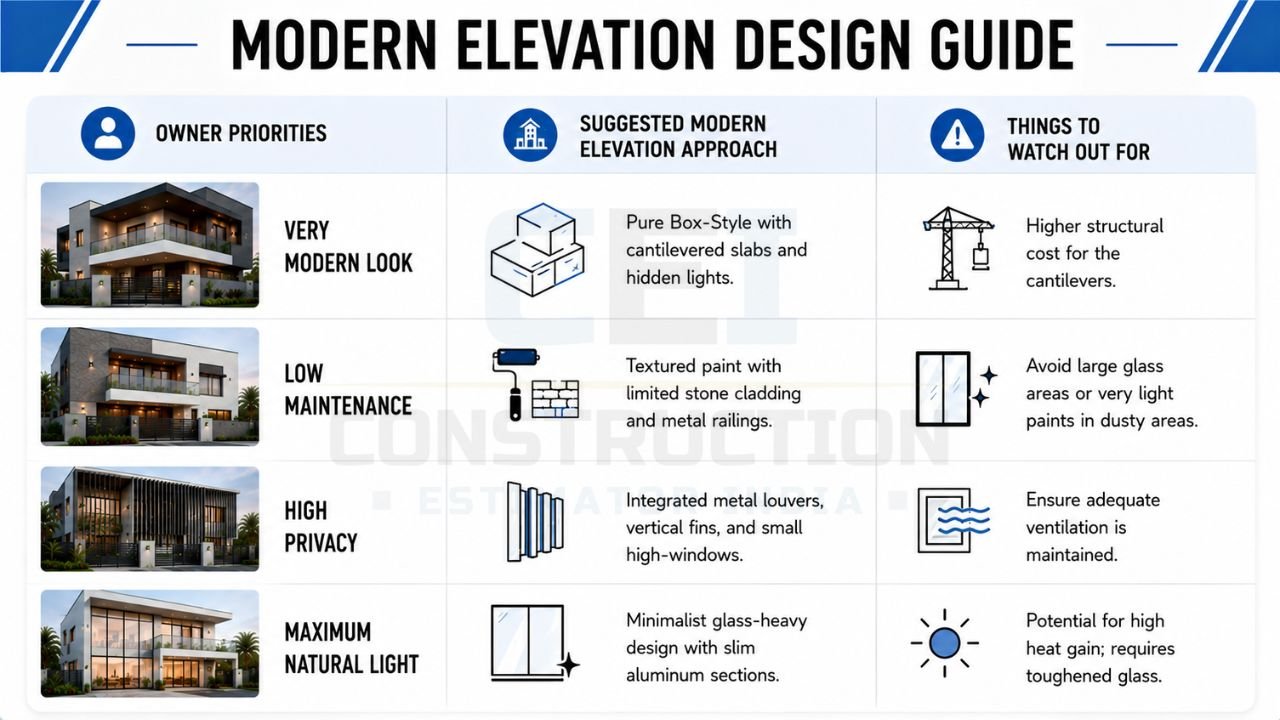
| Owner Priorities | Suggested Modern Elevation Approach | Things to Watch Out For |
|---|---|---|
| Very Modern Look | Pure Box-Style with cantilevered slabs and hidden lights. | Higher structural cost for the cantilevers. |
| Low Maintenance | Textured paint with limited stone cladding and metal railings. | Avoid large glass areas or very light paints in dusty areas. |
| High Privacy | Integrated metal louvers, vertical fins, and small high-windows. | Ensure adequate ventilation is maintained. |
| Maximum Natural Light | Minimalist glass-heavy design with slim aluminum sections. | Potential for high heat gain; requires toughened glass. |
Choosing an approach based on these priorities ensures the house serves your lifestyle. Before you finalize your drawings, contact Construction Estimator India on WhatsApp / Call +91 8630676890 to ensure your priorities align with your budget.
👉 Turn Your Modern Home Ideas into Reality with Professional Design Guidance.
Cost Planning for Modern House Elevation
Where Modern Elevation Costs Increase
While a modern look can be achieved on a budget, certain features will naturally drive the price upward. Specialized structural elements like long cantilevers require extra steel and professional engineering. High-end materials such as HPL panels, natural stone cladding (like granite or slate), and large expanses of toughened glass are significantly more expensive than standard plaster and paint. Additionally, custom metalwork for screens and gates, along with integrated LED façade lighting, adds layers of cost that can surprise homeowners if not planned for early.
Designing “Modern” Without Overspending
The most effective way to save is to prioritize “geometry over materials.” A house with a well-proportioned, interesting shape but finished in high-quality texture paint will often look better than a poorly designed house covered in expensive stone. Another strategy is “zonal cladding”—applying expensive materials like wood panels or stone only to the most visible parts of the façade, such as the entrance or the main balcony, while using paint for the side and rear walls. This creates a high-impact look at a fraction of the cost.
How Construction Estimator India Helps with Modern Elevation Budgeting?
At Construction Estimator India, we believe that every dream home should be built on a foundation of clear financial planning. We provide detailed quantity and cost estimates for various modern elevation options. Whether you want to know the price difference between a basic modern look and one with extensive cladding, or you need to check the exact quantity of paint, steel, and glass used in your façade, our reports provide the transparency you need. By estimating these costs early, Construction Estimator India helps you make informed decisions and avoids the stress of mid-construction budget shortfalls.
Mistakes to Avoid When Chasing a Modern Look
Overusing Glass or Dark Colours Without Checking Climate
One of the most common mistakes is “blindly” copying European designs. In many parts of India, huge south-facing glass windows will lead to astronomical electricity bills due to air conditioning. Similarly, dark charcoal or black walls can absorb immense heat. It is vital to use high-performance glass or provide adequate shading to ensure your modern home remains comfortable.
Adding Too Many “Modern” Elements at Once
A classic error in Indian homebuilding is the “catalog approach,” where the owner tries to include every modern feature they’ve seen: a box frame, a stone wall, a glass railing, a wooden ceiling, and a metal screen all on the same small front. This results in visual clutter. True modernism is about restraint. Pick two or three primary materials and stick to them to ensure a clean, sophisticated aesthetic.
Ignoring Privacy, Comfort, and Future Changes
Modern elevations sometimes prioritize “the look” over daily functionality. For example, a beautiful glass-walled living room is of little use if it overlooks a busy, dusty road and requires the curtains to be closed 24/7. Additionally, many homeowners forget to plan for air conditioning outdoor units or water tanks, which eventually get placed in visible areas, ruining the clean lines of the façade. Always plan for these service areas during the design phase.
👉 Bring Your Dream Home to Life with a Customized Modern Elevation Design.
FAQs: Modern House Elevation for Indian Homes
Does a modern elevation suit small houses?
Yes, absolutely. In fact, a small modern house elevation is often more effective than a traditional one because the clean lines and lack of clutter make the house appear larger and more organized. Focus on vertical elements and a light color palette to maximize the visual impact on a small plot.
How do I choose between box-style and warm contemporary looks?
Choose the box-style if you prefer a high-tech, architectural, and minimalist look. Choose warm contemporary if you want a house that feels “softer” and more traditional in its material palette while still maintaining modern, straight lines. The latter is often preferred for multi-generational family homes in India.
How much can a modern elevation cost compared to a simple traditional one?
A modern elevation can cost anywhere from 5% to 15% more than a traditional one, primarily due to the cost of structural projections (cantilevers) and premium finishes like glass, HPL, or stone cladding. However, a “low-budget modern” approach using just paint and proportions can cost almost the same as a traditional build.
How often do modern façades need repainting or cleaning?
In dusty Indian cities, glass railings and high-gloss finishes may need cleaning every few weeks. High-quality exterior paint typically lasts 5 to 7 years. Cladding materials like stone or tiles are very durable but should be checked for loose adhesive every few years. Construction Estimator India can provide more specific maintenance cost estimates based on your chosen materials.
When should I involve Construction Estimator India for cost and quantity checks?
The best time to involve Construction Estimator India is during the “Draft Plan” stage—after your architect has created the 3D elevation but before you start the actual construction. This allows you to adjust your material choices if the estimated costs exceed your budget.
Conclusion: Choose a Modern House Elevation That Looks Fresh and Works in Real Life
Designing a modern house elevation is an exciting journey that allows you to express your personal style while creating a landmark in your neighborhood. The most successful contemporary homes in India are those that balance the “dream” of a sleek, boxy façade with the “reality” of the local climate, privacy needs, and maintenance requirements. By focusing on strong geometric proportions, a disciplined color palette, and a smart mix of durable materials, you can create a home that feels fresh and sophisticated for years to come.
Planning is the key to a stress-free building experience. Do not leave your material quantities and construction costs to guesswork. Whether you are building a grand double floor modern elevation or a neat small modern house elevation, knowing your numbers is essential. Construction Estimator India is dedicated to supporting self-construction homeowners with precise planning and budgeting.
Before you take the final step and finalize your elevation design, ensure you have the full financial picture. Contact Construction Estimator India on WhatsApp / Call +91 8630676890 today. Let us help you align your modern design goals with a realistic budget, ensuring your dream home is built on a solid foundation of clarity and confidence.