
Building your dream home is a monumental journey, but it can quickly turn into a financial and emotional drain if the wrong partner is chosen. Understanding what to check before hiring a contractor in India is the single most important step you will take in your construction project. In a market where 2026 construction costs are rising and project delays are common, thorough vetting ensures your investment is protected from the start.
Many first-time home builders face issues like poor material quality, unexpected cost escalations, and disputes that stall projects for months. In fact, in regions like Uttar Pradesh, nearly 50% of projects experience significant delays due to poor management or contractor disputes. This guide will provide you with a practical, field-tested checklist to help you identify reliable professionals.
In the following sections, you will learn exactly what to check before hiring a contractor in India, including essential legal documents, how to verify past experience, the importance of itemized BOQ quotes, and the red flags that signal potential fraud. By following this checklist, you can move from uncertainty to a place of confidence, knowing your home is in capable hands.
Verify License, GST, and Basic Credentials
Before you even discuss floor plans, you must ensure the contractor is legally authorized to work. In the modern Indian construction landscape, accountability starts with proper registration.
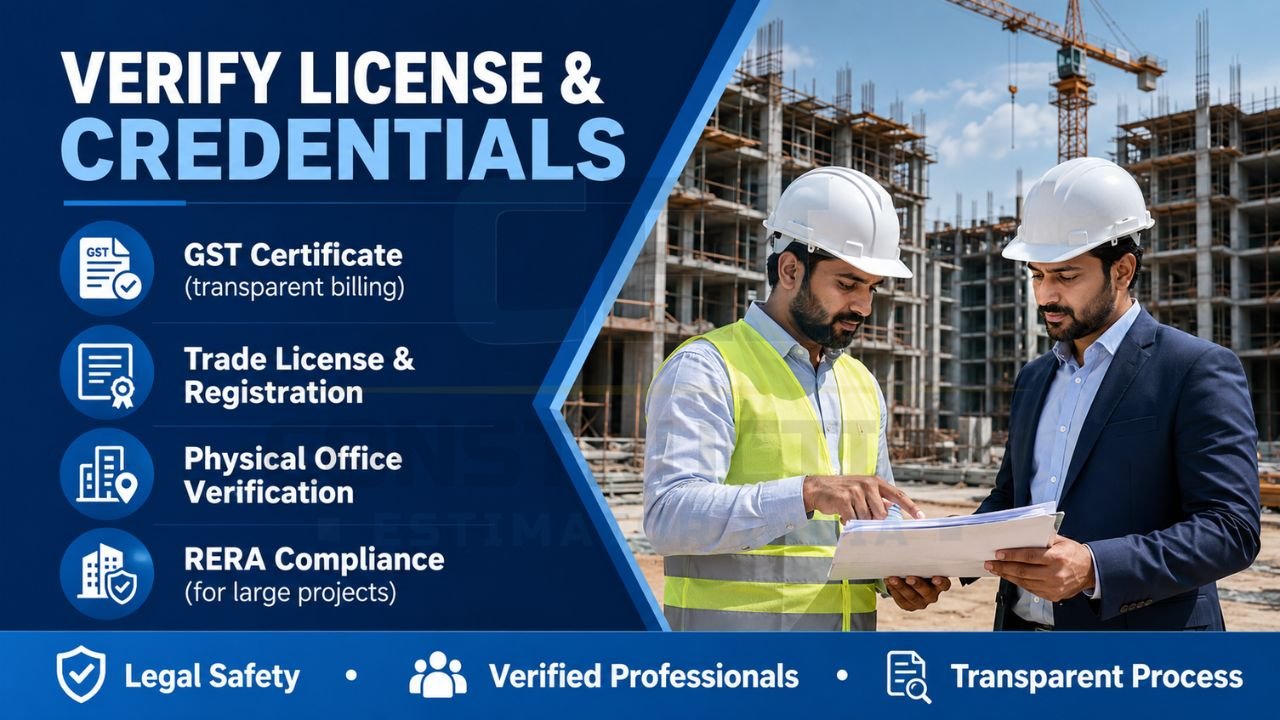
- GST Certificate: Ask for a valid GST registration. This is crucial for transparency in billing and ensures the contractor is a recognized business entity. You can verify GST invoices on the official government portal to avoid fake billing scams.
- Trade License & Registration: Check for local municipality or state-level contractor registrations. While requirements vary by city and state, a registered contractor is generally more accountable to local authorities.
- Physical Office Address: Ensure the contractor has a permanent office. Avoid “flying contractors” who operate solely via mobile phones without a traceable physical location.
- RERA Status: For larger projects or builders, check for RERA (Real Estate Regulatory Authority) registration, which provides an extra layer of legal protection against delays and quality issues.
Before hiring a contractor, it helps to know your approximate construction cost.
Check Experience and Past Projects
Experience is more than just a number of years; it is about the specific type of work they have completed. A contractor who builds commercial warehouses may not be the best fit for a premium residential villa.
- Residential Focus: Ask how many years they have spent specifically building independent houses. Look for a portfolio that matches the size and style of your planned home.
- Site Visits: Request to visit at least one completed project and one ongoing site. This allows you to witness their work culture and the final “finish” quality.
- Quality Observation: During your visit, look closely at the plastering for cracks, the alignment of floor tiles, and the neatness of electrical switchboards. A clean site often indicates a disciplined team.
A proper construction BOQ and material calculation helps you compare contractor quotes fairly.
Get Client References and Speak to Previous Owners
A reputable contractor will never hesitate to share references from past clients. This is a non-negotiable step for any serious project.
When you call these references, don’t just ask if they are “happy.” Ask specific questions:
- Did the contractor stick to the agreed timeline, or were there long periods of inactivity?
- How did they handle “extra” costs? Were there frequent demands for more money mid-project?
- Is the waterproofing holding up, or have there been leakages after the first monsoon?
- Was the contractor responsive and professional when issues were raised?
Get Multiple Detailed, Itemized Quotes (BOQ-Based)
One of the biggest mistakes Indian homeowners make is accepting a “lump sum” or a simple “per-square-foot” rate. These vague numbers often hide poor material specifications or lead to massive “extra” charges later.
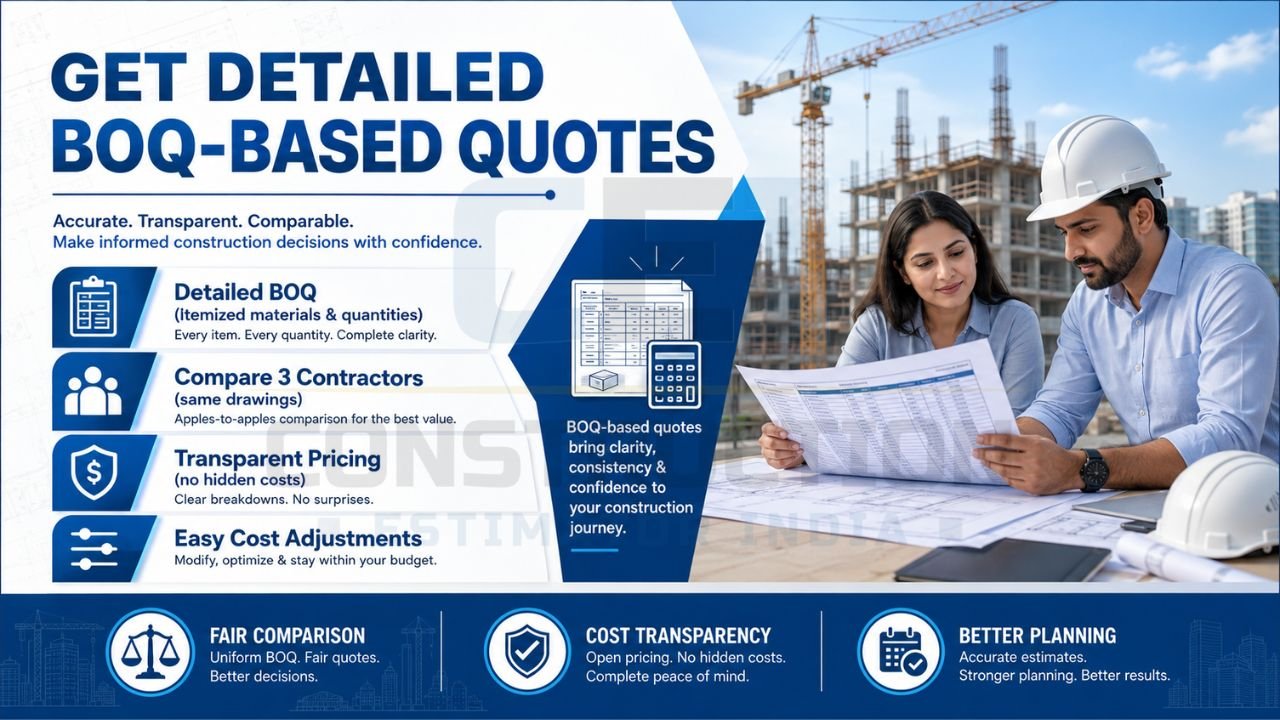
- Detailed BOQ: Demand a Bill of Quantities (BOQ) that breaks down every item—from excavation depth and cement grade to the specific brand of bathroom fittings.
- Fair Comparison: Provide the same set of drawings to at least three contractors so you can compare their quotes “apples-to-apples.”
- Transparency: An itemized quote ensures that if you decide to change a material later, the price adjustment is based on a pre-agreed rate rather than the contractor’s whim.
Understand the Contractor’s Team and Supervision Model
The quality of your home depends on who is actually laying the bricks and bending the steel. You need to know how the work is managed on a daily basis.
- Labour Model: Ask if they have their own core team of skilled masons and supervisors or if they rely entirely on third-party subcontractors.
- Dedicated Supervision: Who will be the daily site supervisor? Does the contractor personally visit the site weekly, or only when payments are due?
- Engineering Oversight: For complex structures, ask if they involve a qualified site engineer to verify structural safety and material ratios.
Check Insurance and Safety Practices
Construction is inherently risky. Without proper insurance, the homeowner can often be held liable for accidents on their property.
- Workmen’s Compensation: Ensure the contractor has insurance to cover labour injuries. This protects you from legal and financial liabilities in case of site accidents.
- Contractor’s All Risk (CAR) Policy: For larger projects, this policy covers damage to the building itself during construction due to fire, collapse, or natural disasters.
- Site Safety: Look for basic safety gear like helmets (PPE), proper scaffolding, and barricading to prevent onlookers from entering dangerous zones.
Review the Contract Agreement Carefully
Never start work on a handshake or a verbal promise. A written construction contract is your primary tool for dispute resolution.
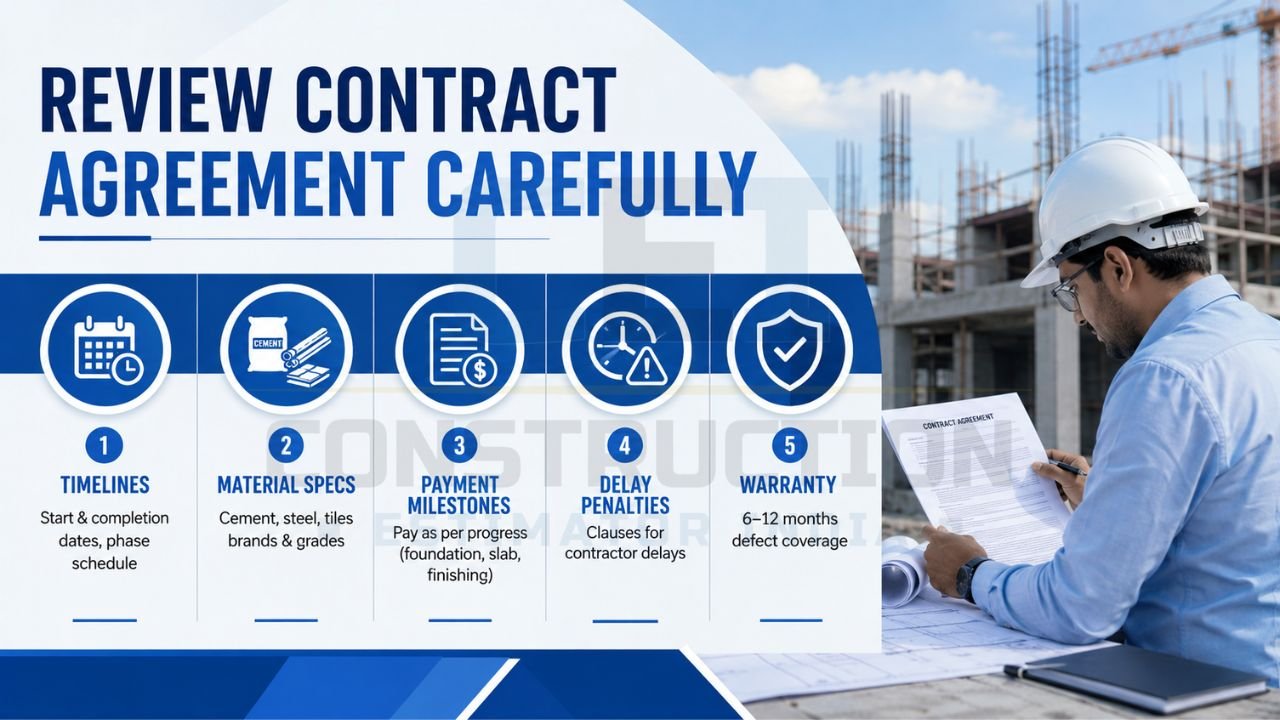
Your contract must include:
- Timelines: Specific start and completion dates, including a schedule for different phases (e.g., foundation, slab, finishing).
- Material Specs: The exact brands and grades of cement, steel, and tiles to be used.
- Payment Milestones: A clear link between work progress and payments (e.g., 20% on foundation, 30% on slab) to ensure you never overpay for unfinished work.
- Penalties: Specific clauses for delays that are within the contractor’s control.
- Warranty: A period (typically 6-12 months post-handover) during which the contractor is responsible for fixing any structural or finishing defects.
Red Flags to Watch Out For
If you notice any of the following, proceed with extreme caution or look for a different partner:
- Refusal to show credentials: If they won’t provide a GST number or a physical office address.
- Too-good-to-be-true rates: Estimates that are significantly lower than market averages often lead to massive “extra” bills later or the use of sub-standard materials.
- High Upfront Demand: Pressuring you for a large advance payment (above 10-15%) before any work or material has arrived on site.
- Vague Quotes: Reluctance to provide a detailed, itemized BOQ.
- No References: Being unable or unwilling to let you speak with past clients or visit active sites.
Use a Proper BOQ and Estimate to Compare Contractors
A Bill of Quantities (BOQ) is not just a price list; it is your project’s financial blueprint. By having an independent expert prepare a BOQ before you hire a contractor, you gain a “benchmark” to measure all incoming bids.
Using a BOQ allows you to:
- Spot “under-quoting” where a contractor might be missing essential items like waterproofing or soil testing.
- Control material usage and prevent wastage or theft during the project.
- Ensure that every contractor is bidding on the exact same quality of materials.
Regular supervision and a clear BOQ make monitoring easier. Explore our construction estimation services here: https://constructionestimatorindia.com/services
Trusted Resources on Hiring Contractors in India
For further reading, we recommend these field-tested guides specifically tailored for the Indian construction market:
- For a detailed field-tested guide on how to hire a reliable contractor in India, see JK Cement’s guide: How to Hire a Reliable Contractor in India (2025).
- For a first-timer’s essential guide to selecting the right contractor, see OnGrid’s guide: A First-Timer’s Essential Guide to Selecting the Right Contractor in India.
Why Use Construction Estimator India Before Hiring a Contractor?
Professional estimation is the best insurance policy for your home-building budget. By knowing your total material and labour costs in advance, you eliminate the guesswork that leads to disputes. Our detailed BOQs allow you to compare contractor quotes with surgical precision, ensuring you get the best value for every Rupee spent.
Whether you are planning a bank loan or self-funding, a professional estimate helps you allocate funds correctly across structural and finishing phases, preventing the common “cash crunch” during the final interior stages.
For a proper cost estimate and BOQ before construction, contact Construction Estimator India on Call / WhatsApp: 8630676890.
Conclusion
Choosing a contractor is a decision that will impact your life for decades. By systematically working through this vetting checklist, you move away from “trusting your gut” toward making a data-driven choice. Remember: verify credentials, demand a detailed BOQ, check multiple references, and always—always—get everything in writing.
Before hiring a contractor, get a clear cost estimate and BOQ to compare quotes and avoid surprises.
FAQs – What to Check Before Hiring a Contractor in India
What is the most important thing to check before hiring a contractor in India?
The most critical step is verifying their past work and client references. Talking to people who have lived in a house built by that contractor for at least a year will reveal the true quality of their construction.
Do I really need a written contract for house construction?
Yes. A written contract is essential to avoid “verbal amnesia” regarding costs, timelines, and material quality. It is your only legal protection if things go wrong.
How many contractor quotes should I get before deciding?
It is recommended to get at least 3 detailed, itemized quotes. This provides enough data to spot market-rate outliers and choose a contractor who offers a fair balance of price and quality.
Why is a BOQ important when hiring a contractor?
A BOQ ensures everyone is pricing the same scope of work. Without it, one contractor might be quoting for premium tiles while another quotes for basic ones, making their final prices impossible to compare fairly.
What are the biggest red flags when hiring a contractor?
A lack of a physical office, demands for large cash advances, refusal to provide a detailed written quote, and pressure to sign an agreement immediately without reviewing documents.