Imagine standing in your newly plastered living room in Meerut or Delhi, faced with a decision that will define your home’s aesthetic health for the next decade. Should you opt for the “Quiet Luxury” of a high-sheen emulsion that laughs at monsoon humidity, or the traditional, cost-effective reliability of Oil Bound Distemper (OBD)? As experts at Construction Estimator India, we know that this choice isn’t just about a color card; it’s a strategic financial decision that impacts your material quantity, labor hours, and long-term maintenance.
The direct answer to the difference between emulsion paint and oil bound distemper is that emulsion is a high-performance, acrylic-based paint that is fully washable and lasts 7–10 years, whereas oil bound distemper is a hybrid “washable distemper” made of chalk, lime, and oil that offers a matte finish, lasts 3–5 years, and is roughly 40–60% cheaper upfront. For modern Indian homes in 2026, emulsion is the standard for luxury and health-conscious living, while OBD remains the king of rental properties and budget-conscious transformations.
For accurate painting cost estimation or BOQ for your home interior project in India (emulsion paint or oil bound distemper), WhatsApp or call us today at +91 8630676890.
2026 Paint Selection Cheat Sheet
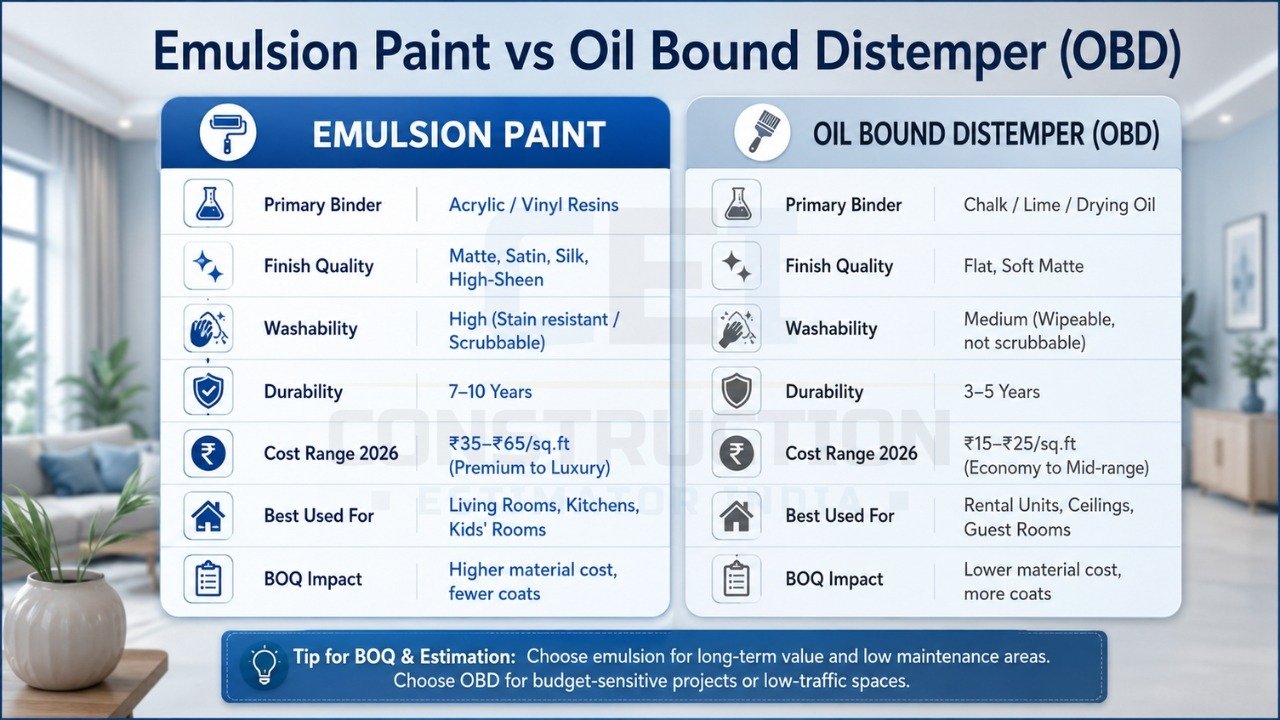
| Feature | Emulsion Paint (Plastic Paint) | Oil Bound Distemper (OBD) |
|---|---|---|
| Primary Binder | Acrylic / Vinyl Resins | Chalk / Lime / Drying Oil |
| Finish Quality | Matte, Satin, Silk, High-Sheen | Flat, Soft Matte |
| Washability | High (Stain resistant/Scrubbable) | Medium (Wipeable, not scrubbable) |
| Durability | 7–10 Years | 3–5 Years |
| Cost Range 2026 | Premium to Luxury (₹35-₹65/sq.ft) | Economy to Mid-range (₹15-₹25/sq.ft) |
| Best Used For | Living Rooms, Kitchens, Kids’ Rooms | Rental Units, Ceilings, Guest Rooms |
| BOQ Impact | Higher material cost, lower coats | Lower material cost, more coats |
👉 Confused Between Emulsion Paint and Oil Bound Distemper? Get Clear Expert Guidance
2026 Trends: Biophilic Health and The Shift to Emulsion
The Indian home improvement market in 2026 has moved beyond simple “whitewashing.” Drawing on our 10+ years of construction estimating expertise, we have seen a massive transition toward “health-first” interiors. In cities like Noida and Gurgaon, homeowners are prioritizing low-VOC (Volatile Organic Compounds) emulsions that offer air-purification technology, such as the Asian Paints official guide on emulsion paint vs oil bound distemper 2026.
While Oil Bound Distemper remains popular for its “breathability” in traditional masonry, the 2026 trend of “Quiet Luxury” favors the velvet-like finish of premium emulsions. We are seeing a 65% increase in requests for professional interior painting estimation services specifically for high-durability emulsions that can withstand the intense North Indian dust and heat.
What is Emulsion Paint? The Modern Standard
Emulsion paint, often called “plastic paint” in the Indian market, is a water-based finish where pigments are suspended in acrylic or vinyl resins. When applied, the water evaporates, leaving behind a tough, flexible, plastic-like film that binds to the wall.
- Composition: Acrylic resins, high-opacity pigments, and additives for fungal resistance.
- Performance: In the 2026 landscape, emulsions like Asian Paints Royale Glitz feature Teflon surface protectors, making them virtually impossible to stain.
- Health: Most premium versions are now zero-VOC, which is a critical factor we include in our house construction cost estimation services for families with children or pets.
What is Oil Bound Distemper? The Traditional Value
Oil Bound Distemper (OBD) is a superior version of traditional dry distemper. It contains drying oils that make it “washable” (to a degree) and much more durable than basic whitewash.
- Composition: Chalk, lime, water, and an oil-based binder that hardens upon drying.
- Finish: It provides a soft, flat matte finish that is excellent at hiding minor plastering defects—a common challenge in Indian construction.
- The “Hybrid” Nature: It bridges the gap between economy and premium, offering a decent look for those who want a better-than-basic finish without the “plastic paint” price tag.
Technical Showdown: 7 Key Differences Analyzed
Understanding the difference between emulsion paint and oil bound distemper requires looking at how they perform in real-world Indian scenarios.
1. Durability and Life Span
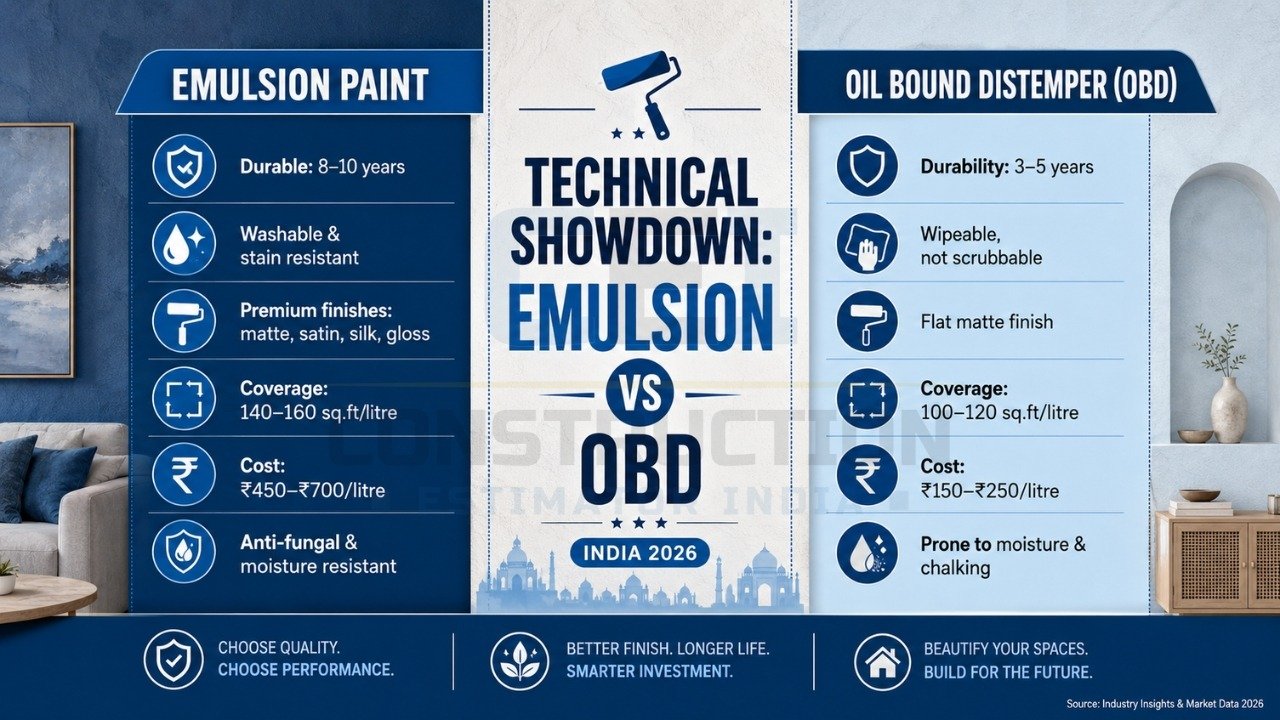
Emulsion is built for the long haul. A high-quality emulsion can easily last 8–10 years without losing its color or sheen. OBD, however, typically begins to “chalk” or fade after 3–5 years, especially in high-traffic corridors.
2. Washability: The “Wet Cloth” Test
This is the biggest pain point for Indian households. Emulsions are truly washable; you can scrub off tea stains or crayon marks with a damp cloth and mild soap. OBD is “wipeable”—you can remove light dust, but aggressive scrubbing will peel the paint layer.
3. Finish and Aesthetics
Emulsions offer a variety of finishes: Matte, Satin, Silk, and High-Gloss. They reflect light beautifully, creating a premium “Silk” effect. OBD is restricted to a flat, chalky matte look. While less premium, this flat finish is superior for hiding uneven walls in older Meerut homes.
4. Coverage and Spread Rate
One liter of emulsion typically covers 140–160 sq.ft (2 coats), whereas OBD covers roughly 100–120 sq.ft. This means you need more liters of OBD to cover the same area, a fact often missed by DIY homeowners but caught in our professional interior painting estimation services.
5. Cost and Project Budget
In 2026, the price of premium emulsion is roughly ₹450–₹700 per liter, while OBD stays in the ₹150–₹250 range. However, when you factor in the lifespan, emulsion often works out cheaper per year of service.
6. Application and Labor
Emulsion requires a Level 5 putty finish to look good; it is “unforgiving” of bumps. OBD is more lenient and can be applied over simpler surface prep, often reducing the initial labor cost.
7. Moisture and Algal Resistance
During the Indian monsoon, walls are prone to “black spots.” Emulsions contain advanced anti-fungal additives. OBD, being more organic (lime/chalk based), is more susceptible to mold if the room lacks proper ventilation.
👉 Choose the Right Paint Type for Better Finish, Durability & Value
The Estimator’s Secret: How Choice Impacts Your BOQ
At Construction Estimator India, we bring our 10+ years of construction estimating expertise to every project to ensure you don’t overspend on “guesstimates”.
- The “Hiding Power” Factor: Cheaper OBD often requires 3 coats to hide the underlying plaster, while premium emulsion covers in 2. This extra coat of OBD can double your labor hours, narrowing the cost gap.
- Pigment Costs: Deep colors in emulsion are significantly more expensive than light shades in OBD due to the cost of organic pigments used in 2026 formulations.
- Wastage Control: Our precision BOQs typically save clients 10–15% on material by calculating the exact “spread rate” based on your wall’s porosity.
Check out the interior painting cost per sq ft in India 2026 for a transparent breakdown of labor vs. material.
Refer to the latest 2026 paint comparison by Berger and Nerolac (emulsion vs oil bound distemper) for technical data sheets on moisture resistance.
Suitability for the Indian Climate: Heat and Monsoon
India’s climate is brutal on paint. In 2026, we evaluate suitability based on:
- Heat Reflection: White emulsions can reflect UV rays, keeping interiors 2–3°C cooler. OBD, being a thicker, chalk-based layer, lacks these thermal benefits.
- Monsoon Resilience: OBD tends to absorb humidity from the air, which can lead to bubbling or peeling. Emulsions form a breathable but water-resistant barrier that is much safer for homes in high-rainfall zones.
Room-by-Room Guide: When to Choose Which
- Living Room & Master Bedroom: Recommendation: Emulsion (Silk/Satin). These are social hubs where you want a premium look and the ability to wipe off accidental stains.
- Kids’ Rooms & Kitchens: Recommendation: Premium Emulsion (Washable). Stains are inevitable here. You need a paint that can handle scrubbing.
- Ceilings & Guest Rooms: Recommendation: Oil Bound Distemper. Ceilings rarely face physical contact, so the non-washability of OBD isn’t an issue, and its matte finish hides structural imperfections.
- Rental Properties: Recommendation: OBD. If you are a landlord, OBD is the most cost-effective way to provide a fresh, clean look between tenants.
For accurate painting cost estimation or BOQ for your home interior project in India (emulsion paint or oil bound distemper), WhatsApp or call us today at +91 8630676890.
Vastu Shastra for Interior Painting: A 2026 Guide
Vastu is essential for the 500+ happy clients we’ve served. The “energy” of your finish matters as much as the color.
- North-East (Water): Light Blue or White emulsion to promote mental clarity.
- South-East (Fire): Pink or Orange shades in a satin finish to ignite prosperity.
- South-West (Earth): Yellow or Light Brown to provide family stability.
- North-West (Air): Cream or White to maintain social connections.
Refer to the official 2026 emulsion paint and oil bound distemper recommendations in India for Vastu-aligned color palettes.

👉 Get Expert Tips to Choose the Perfect Paint for Every Room
Frequently Asked Questions (FAQ)
- Which is better for a new house, emulsion or distemper?
For a new house in 2026, emulsion is significantly better due to its longevity and premium finish on new wall putty. - Is oil bound distemper cheaper than emulsion?
Yes, per liter, OBD is 40–60% cheaper. However, when you factor in durability (repainting every 3 years vs 8 years), emulsion is often more economical. - Can I apply emulsion over old distemper?
Yes, but you must thoroughly scrape off the old, chalky OBD and apply a high-quality primer first to ensure adhesion. - Is emulsion paint safe for health?
Modern 2026 emulsions are low-VOC or zero-VOC, making them much safer for indoor air quality than traditional paints. - Which paint is best for ceilings?
Distemper is often preferred for ceilings because it is cost-effective and its matte finish hides “shadowing” and plaster unevenness. - Does emulsion paint have a strong smell?
No, premium water-based emulsions in 2026 have almost no odor and dry within 2–4 hours. - What is the coverage of OBD vs Emulsion?
Emulsion: 140–160 sq.ft/liter. OBD: 100–120 sq.ft/liter (for 2 coats). - How do I know if my current paint is distemper?
Rub your hand on the wall. If a white, chalky powder comes off on your palm, it is likely distemper.
Conclusion & Final Expert Advice
Choosing between emulsion paint and oil bound distemper is a balance of your immediate budget and your long-term maintenance goals. If you are building your “forever home,” the investment in a high-quality, washable emulsion will pay for itself through durability and reduced labor costs over a decade. For budget-constrained projects or temporary rental spaces, OBD remains a valid and honorable choice that provides a clean, classic look.
Remember, the most expensive paint is the one that needs to be redone because of poor estimation. Avoid the guesswork and ensure your home transformation starts with a solid financial plan.
For accurate painting cost estimation or BOQ for your home interior project in India (emulsion paint or oil bound distemper), WhatsApp or call us today at +91 8630676890.