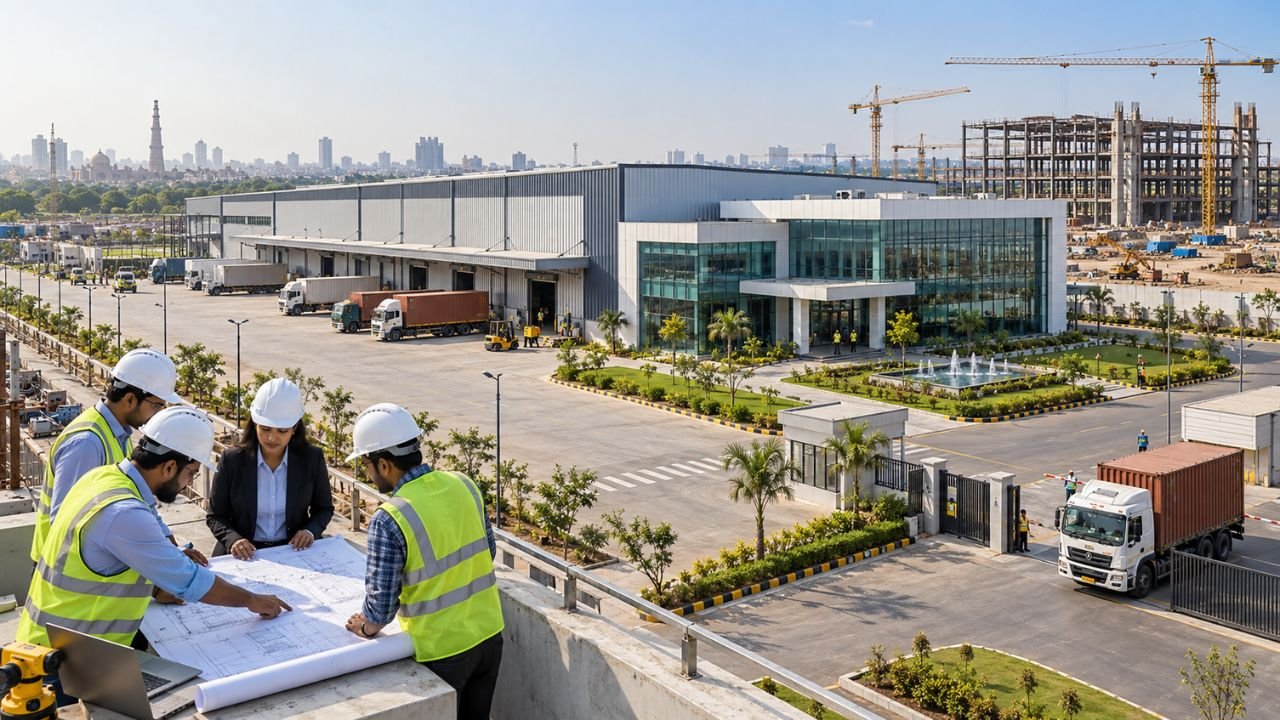
Imagine you are a self-building homeowner in Meerut, Uttar Pradesh. After eighteen months of navigating material shortages, labor shifts, and the scorching heat of the plains, your three-story dream home is finally standing. The scaffolding is down, the Teak wood frames are polished, and you’ve just received your completion certificate. You feel a sense of triumph, but there is a lingering anxiety: what if a short circuit or a sudden monsoon flood damages this brand-new asset tomorrow? You check your files and realize you only have a construction-phase policy. This is the exact moment you need building insurance for a new build.
Many homeowners in North India make the critical mistake of assuming their construction-phase insurance (like Contractors All Risk) automatically covers the completed structure. In reality, there is a vital transition point. Building insurance for a new build—often structured under the Bharat Griha Raksha framework—is designed specifically for finished dwellings. It protects the physical anatomy of your property, from the foundation and walls to permanent fixtures like plumbing and electrical wiring, against unpredictable perils.
Whether you are an individual builder in Delhi-NCR or a developer in a growing tier-2 city, understanding this policy is essential for accurate project costing and long-term security. In this guide, we will break down exactly what this insurance covers, when you must switch from your construction policy, and how to calculate the correct sum insured in 2026’s economic climate. Secure your investment today by mastering the nuances of post-construction protection.
What is Building Insurance for a New Build?
Building insurance for a new build is a specialized insurance policy designed to protect the physical structure of a recently completed property. Unlike insurance for an existing, older home, this policy takes over the moment the construction phase ends and the building is deemed fit for habitation. It focuses entirely on the “immovable” parts of the property—the shell, the roof, the floors, and everything permanently attached to them.
In India, this coverage is primarily delivered through the Bharat Griha Raksha (BGR) policy, a standardized product mandated by the IRDAI. It is distinct from “Contents Insurance,” which covers your furniture and electronics, and “Contractors All Risk (CAR) Insurance,” which only covers the building while it is a work-in-progress. For a new build, this policy ensures that if a natural disaster occurs, you have the financial means to reinstate the building to its original, brand-new condition without dipping into your life savings.
Why You Need Building Insurance for a New Build?
The primary reason you need building insurance for new construction India is the sheer scale of your financial exposure. For most people in Uttar Pradesh and Delhi-NCR, a new home represents 70–80% of their total net worth. Relying on luck is not a strategy, especially in regions prone to seismic tremors (Zone IV/V) or unpredictable flash floods.
Secondly, if you have taken a home loan from banks like SBI, HDFC, or ICICI, they will almost certainly mandate building insurance as a condition for the loan. Lenders view your house as collateral; if the building is destroyed, they need to know the insurance payout will cover the debt. Beyond legal and banking requirements, this insurance provides a “loss of rent” shield if you’ve built the property as an investment, ensuring your cash flow remains stable even if the building becomes uninhabitable due to a covered peril.
When to Buy Building Insurance for a New Build?
The most critical advice for any homeowner is to understand the “switch point.” You should purchase building insurance for a new build precisely when the construction risk ends. This usually occurs when you receive the Occupancy Certificate (OC) or the Completion Certificate (CC) from your local development authority, such as the Meerut Development Authority (MDA) or Noida Authority.
Delaying this purchase is a common and dangerous mistake. There is often a “gap” of several weeks between the day the last contractor leaves and the day the family moves in. If a fire occurs during this window and you haven’t switched from your CAR insurance to a BGR policy, your claim could be rejected because the nature of the risk has changed. Ideally, you should have the new policy ready to kick in the day your construction insurance expires.
What Does Building Insurance for a New Build Cover?
A comprehensive policy for a new home in 2026 provides an “all-risk” feel, covering a wide array of perils that could devastate a new structure. The coverage includes:
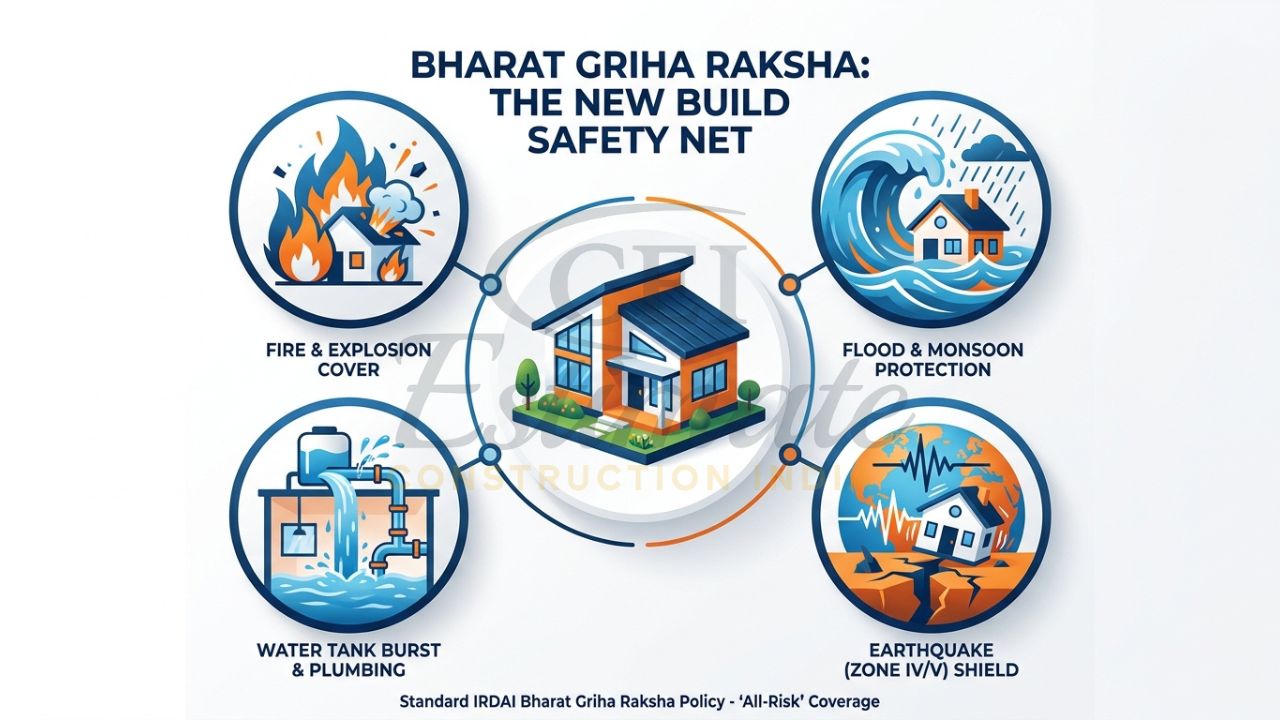
- Fire and Explosions: Protection against accidental fires, lightning strikes, and gas explosions.
- Natural Calamities: Essential for India, this covers floods, inundation, storms, cyclones, and earthquakes.
- Impact Damage: Damage caused by falling trees, aircraft, or vehicles crashing into your boundary wall.
- Plumbing Disasters: Bursting or overflowing of water tanks and pipes—a common issue in new builds with pressurized systems.
- Theft and Malicious Acts: While contents aren’t covered, damage to the structure during an attempted break-in (like broken doors) is.
- Additional Structures: Your garage, compound walls, gates, and even servant quarters are typically covered under the same sum insured.
- Professional Fees: Payouts often include fees for architects, surveyors, and consulting engineers required for repairs, as well as the cost of debris removal.
For a new build in North India, where dust storms and monsoon inundation are frequent, ensuring these “Special Perils” are active is non-negotiable for long-term safety.
Building Insurance vs Construction Insurance (CAR) for New Builds
Understanding the boundary between these two is vital. You cannot use a construction policy for a finished home, and you cannot buy a standard home policy for a building that is still a skeleton of bricks and mortar.
| Feature | Construction Insurance (CAR/Builders Risk) | Building Insurance for a New Build (BGR) |
|---|---|---|
| Coverage Period | Groundbreaking until completion/handover. | Post-completion, usually after OC/CC. |
| What is Covered | Works-in-progress, raw materials, scaffolding. | Finished structure, foundation, fixed fittings. |
| Sum Insured Basis | Estimated Total Contract Value. | Reinstatement Value (Current rebuild cost). |
| When to Buy | Before construction starts. | Immediately upon building completion. |
| Typical Cost | 0.50% – 1.5% of project value. | 0.15% – 0.50% of rebuild cost. |
| Key Difference | Covers site-specific accidents and material theft. | Covers long-term structural and natural risks. |
How Much Does Building Insurance for a New Build Cost in India?
The insurance for new build home India 2026 is surprisingly affordable, often representing the smallest line item in your total project budget. The premium is calculated based on the Reinstatement Value—the cost to rebuild the house from scratch at 2026 rates, excluding the land cost.

Typically, premiums range from 0.15% to 0.50% of the sum insured annually. For example:
- 1,000 sq. ft. Home: If the reconstruction cost is ₹2,500/sq. ft. (Total ₹25 Lakhs), the annual premium is roughly ₹3,000 to ₹7,000.
- 2,000 sq. ft. Home: If the reconstruction cost is ₹3,500/sq. ft. (Total ₹70 Lakhs), the annual premium is roughly ₹8,000 to ₹15,000.
Factors like being in a high-seismic zone (Delhi-NCR) or a flood-prone area in UP may slightly increase these rates. However, buying a long-term policy (up to 10 years) often secures a significant discount compared to annual renewals.
Step-by-Step Guide to Buying Building Insurance for Your New Build
Buying the right policy for your new property involves more than just picking a low premium. Follow these steps to ensure you are fully protected:
- Calculate Reinstatement Value: Use your final Bill of Quantities (BOQ) to determine the actual cost of materials and labor required to rebuild the structure today.
- Compare Quotes: Use digital platforms to compare Bharat Griha Raksha policies from major insurers like ICICI Lombard, HDFC Ergo, or SBI General.
- Select Add-ons: Consider “Escalation Cover” to account for rising material costs during the policy year and “Loss of Rent” if you are a landlord.
- Prepare Documentation: Have your property address, carpet area, age of construction, and photographs of the finished building ready.
- Finalize the Policy: Ensure the policy start date coincides with the handover of the property.
Claims Process for a New Build Property
If a disaster strikes your new home, acting quickly is essential for a smooth settlement.
- Immediate Intimation: Call your insurer within 24–48 hours of the damage.
- Document Everything: Take high-quality photos and videos of the damage before any cleanup or repairs begin.
- The Surveyor’s Role: An IRDAI-licensed surveyor will visit the site. Provide them with your original construction BOQ and repair estimates to justify the claim amount.
- Avoid Repairs: Do not start permanent repairs (except for emergency mitigation) until the surveyor has completed their inspection.
Why Estimators Must Include Building Insurance in New Build Costing?
As a professional at Construction Estimator India, I cannot stress enough that building insurance for a new build is a vital component of project risk management. For estimators, including the first year’s insurance premium as a line item in the final project cost estimate demonstrates high-level professionalism.
It ensures the client is protected from the moment they receive the keys and prevents “soft cost” surprises after the construction budget is closed. By factoring in the cost of building insurance for new home projects, you help your clients transition from a successful construction phase to a secure homeownership experience.
Conclusion
Securing proper building insurance for a new build is the final, non-negotiable step in your construction journey. It bridges the gap between a vulnerable work-site and a protected family asset. By understanding the transition from CAR insurance to Bharat Griha Raksha, you ensure that your investment in Meerut, Delhi-NCR, or anywhere in India remains safe from the unpredictable forces of nature.
Don’t let your hard work go unprotected. Calculate your reinstatement value accurately, choose a robust policy, and build with the confidence that your new home is truly secure. For professional BOQ services and expert cost estimation that includes comprehensive insurance planning for your new build, contact Construction Estimator India today.
FAQ Section
What is building insurance for a new build in India?
It is a policy (typically Bharat Griha Raksha) that covers the physical structure and permanent fixtures of a completed new house against fire, natural disasters, and accidental damage.
When should I buy building insurance after completing construction?
You should buy it immediately after receiving your completion or occupancy certificate, ensuring the coverage starts the day your construction insurance expires.
Can I continue using CAR insurance for my new build?
No. CAR insurance is for under-construction properties. Once the building is finished and ready for occupation, you must switch to a home building insurance policy.
What does building insurance for a new build cover?
It covers the walls, roof, foundation, plumbing, wiring, and permanent fittings against fire, floods, earthquakes, riots, and impact damage.
How is sum insured calculated for a new home?
It is based on the “Reinstatement Value”—the current cost of materials and labor to rebuild the structure, excluding the land cost.
How much does building insurance cost for a new build in 2026?
The annual premium typically ranges from 0.15% to 0.50% of the reconstruction cost. For a ₹50 Lakh home, this is roughly ₹7,500 to ₹15,000 per year.
Is building insurance mandatory for new constructions?
While not legally mandatory for all, it is almost always required by banks for home loans and is a hallmark of responsible property ownership.
Does Bharat Griha Raksha cover new builds?
Yes, Bharat Griha Raksha is the standard IRDAI-approved policy used for residential buildings in India, including newly constructed homes.
How to include building insurance in my final project cost estimate?
Add it as a separate line item under “Post-Construction Costs” or “Compliance,” using a 0.25% estimate of the total civil construction value.
Related Article Suggestions:
- Learn about: What is Under Construction Building Insurance?
- Read our guide on: How Much is Insurance for Construction in India?
- Expert Tips: What is Home Structure Building Insurance?