
When you walk into a newly built house, the excitement of possession can make it easy to overlook small imperfections. Yet many of these small imperfections are actually signs of poor workmanship that can turn into expensive problems later. Cracks in walls, honeycombing in columns, water seepage, uneven floors — these are not “normal settling” issues. They are clear warnings that something went wrong during construction.
In 2026, with material costs still high and clients demanding better quality, recognizing and fixing poor workmanship in construction has become a priority for responsible builders and contractors across Agra, Uttar Pradesh, Delhi NCR, and other parts of India. This article identifies the six most frequent signs of poor workmanship seen in residential and small commercial projects and explains exactly how professional construction companies diagnose and repair them. You will also learn practical prevention tips so you can avoid these issues in your own project.
Understanding these signs empowers homeowners to ask the right questions during construction and gives contractors a clear roadmap to deliver high-quality work that stands the test of time.

What is Poor Workmanship in Construction?
Poor workmanship refers to any deviation from accepted standards of construction quality caused by lack of skill, carelessness, use of substandard materials, or shortcuts taken to save time or money. It is not always intentional — sometimes it results from inadequate supervision, poor training of labour, or pressure to meet unrealistic deadlines.
In Indian residential projects, poor workmanship most commonly appears in RCC work, brickwork, plastering, waterproofing, and finishing stages. The consequences range from cosmetic defects like uneven paint to serious structural issues like cracks and water leakage that reduce the building’s lifespan and resale value.
Sign 1: Visible Cracks in Walls, Beams or Slabs
One of the earliest and most visible signs of poor workmanship is the appearance of cracks. Not all cracks are dangerous, but the pattern and timing tell the real story.
Common types and causes:
- Hairline shrinkage cracks — usually due to rapid drying or poor curing.
- Wide diagonal or step-like cracks — often indicate differential settlement or poor RCC execution.
- Cracks at beam-column junctions — caused by cold joints or insufficient reinforcement.
How a professional construction company fixes it:
- Assess the crack width and pattern with a structural engineer.
- For non-structural cracks: clean, apply polymer-modified mortar or epoxy injection.
- For structural cracks: stitch the crack with steel plates or carbon fibre wrapping, then re-plaster and paint.
- Address the root cause (e.g., improve foundation stability or curing practices) to prevent recurrence.
Early intervention usually restores full strength without major demolition.
Sign 2: Honeycombing and Exposed Reinforcement
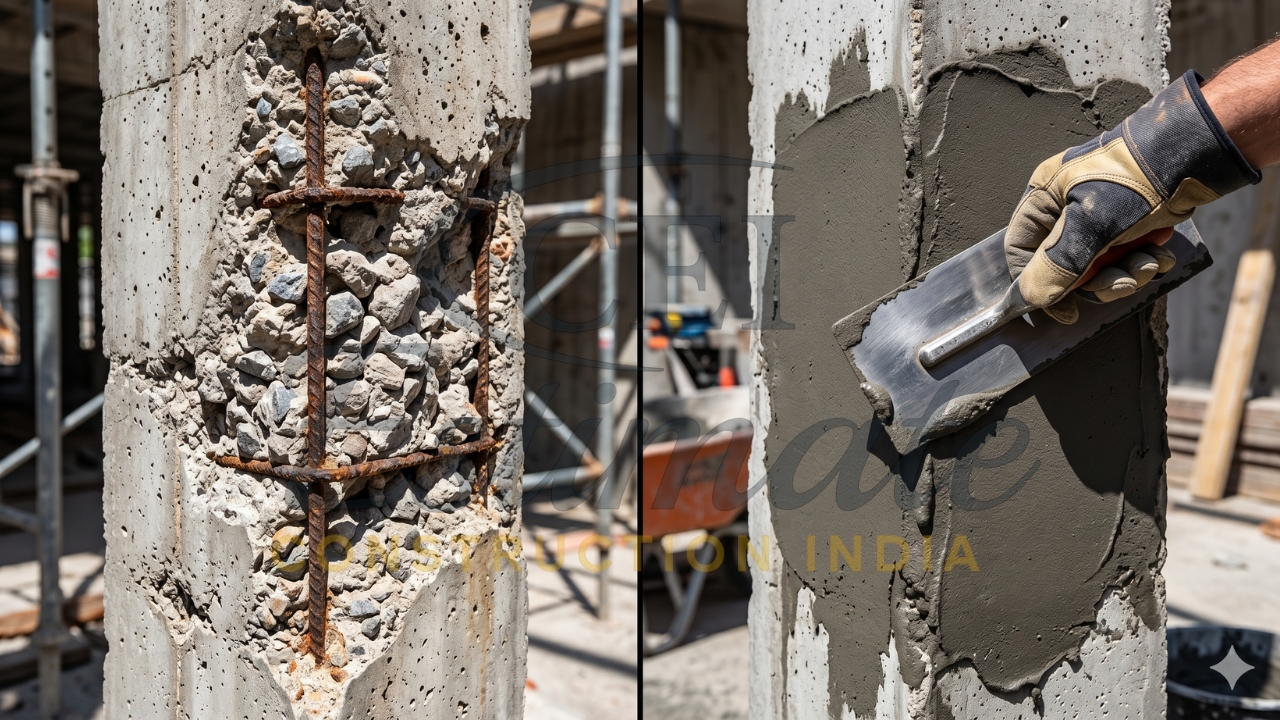
Honeycombing appears as rough, honey-comb-like patches with exposed stones and air voids, especially on columns and beams. It is one of the most common signs of poor workmanship in RCC.
Why it happens:
- Inadequate vibration
- Stiff concrete mix
- Congested reinforcement
- Poor formwork
How a professional construction company fixes it:
- Chip out loose concrete until sound material is reached.
- Clean the area and apply bonding agent.
- Re-concrete with micro-concrete or polymer-modified repair mortar.
- For exposed reinforcement: clean rust, apply anti-corrosive coating, then repair with high-strength mortar.
- In severe cases, add additional reinforcement and jacketing.
Good companies prevent honeycombing by using proper vibrators and mix design from the start.
Sign 3: Uneven Plastering and Poor Finishing
Uneven walls, wavy surfaces, and patchy plaster are clear indicators of rushed or unskilled workmanship.
Common issues:
- Thick and thin patches
- Poor bonding with the base
- Cracks within weeks of application
How a professional construction company fixes it:
- Hack off defective plaster completely.
- Clean the surface and apply a bonding agent.
- Re-plaster in two coats with correct mix ratio and proper curing.
- For minor undulations, use self-levelling compounds or gypsum plaster.
- Finish with premium paint for a smooth, long-lasting surface.
Choose Your Construction Services
Connect with verified experts for your project. We provide professional
General Contractors, Sub-contractors, Builders, and Material Suppliers.
Our network also includes specialized 3D Rendering Developers and Interior Experts.
Sign 4: Water Leakage and Dampness
Water leakage from roofs, bathrooms, or external walls is one of the most frustrating signs of poor workmanship.
Root causes:
- Inadequate waterproofing
- Poor slope on terraces
- Cracks in slab or walls
- Bad plumbing joints
How a professional construction company fixes it:
- Identify the exact source using dye tests or moisture meters.
- For roof leakage: apply liquid waterproofing membrane or torch-applied membrane system.
- For wall dampness: inject chemical grout or use crystalline waterproofing compounds.
- Re-do external plaster with waterproofing additives.
- Improve drainage around the building.
Modern companies in 2026 use advanced polymer-based systems that provide 10+ years of protection.
Sign 5: Misaligned Doors, Windows and Uneven Flooring
Sticking doors, windows that don’t close properly, and floors that feel uneven are classic workmanship issues.
Causes:
- Poor alignment during brickwork or RCC
- Uneven PCC base
- Rushed tile laying
How a professional construction company fixes it:
- For doors/windows: re-align frames, adjust hinges, or replace if damaged.
- For flooring: level the base with self-levelling screed, then re-lay tiles.
- In severe cases, remove and redo the entire floor with proper slope and expansion joints.
Sign 6: Poor Quality RCC Work (Sagging, Weak Joints, Inadequate Cover)
This is the most serious category of poor workmanship because it affects structural safety.
Visible signs:
- Sagging slabs or beams
- Weak or leaking construction joints
- Early rust stains (indicating low cover)
How a professional construction company fixes it:
- Conduct non-destructive testing (rebound hammer, ultrasonic pulse velocity).
- For sagging: provide additional support or jacketing with micro-concrete.
- For weak joints: epoxy injection or additional reinforcement stitching.
- For low cover: apply protective coatings or carbon fibre wrapping.
In extreme cases, partial demolition and reconstruction may be required, but early detection usually allows economical strengthening.
How Professional Construction Companies Prevent and Fix Poor Workmanship?
Reputable construction companies in 2026 follow a robust quality control system:
- Detailed BOQ and approved drawings before starting.
- Regular material testing at site laboratory.
- Daily supervision by qualified engineers.
- Stage-wise checklists for every RCC pour.
- Third-party audits for critical stages.
- Proper training of labour teams.
They also maintain detailed records and photographs so that any defect can be traced and fixed quickly.
[Link: Common Mistakes in RCC Work] provides deeper insights into the root causes of these issues.
Tips for Homeowners to Avoid Poor Workmanship
- Hire experienced contractors with proven past work.
- Insist on a detailed agreement with clear milestones and penalties.
- Appoint an independent engineer for periodic site visits.
- Verify all materials before use (ISI marks, test certificates).
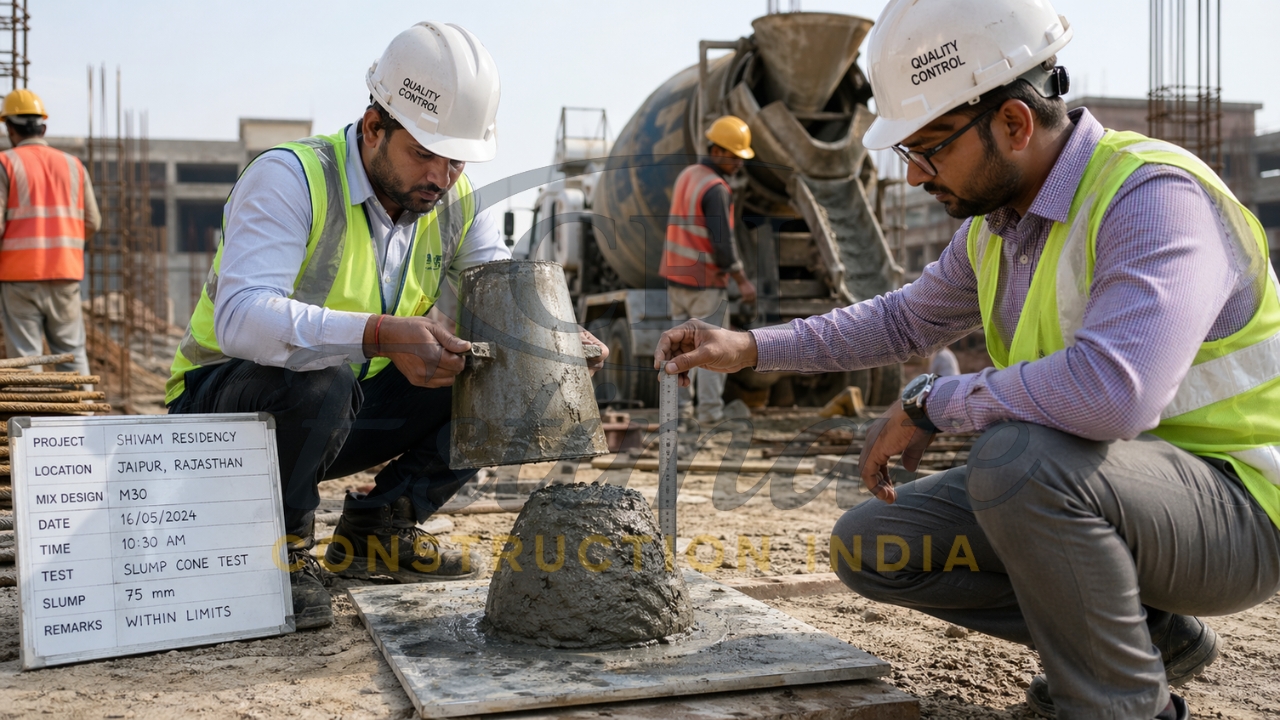
- Demand slump tests and cube tests during concreting.
- Ensure proper curing is followed for the full duration.
- Withhold final payment until the defects liability period ends.
Conclusion
6 Signs of Poor Workmanship & How a Construction Company Fixes them is knowledge every homeowner and contractor should have in 2026. Visible cracks, honeycombing, water leakage, uneven finishing, misaligned fixtures, and poor RCC quality are not minor issues — they are warning signals that can lead to major structural and financial problems if ignored.
The good news is that most of these defects are preventable with proper planning, skilled execution, and regular quality checks. Professional construction companies identify these signs early and use proven repair techniques such as epoxy injection, polymer mortar, waterproofing membranes, and structural strengthening to restore the building to its intended strength and appearance.
By staying alert to these six signs and working with experienced teams that follow best practices, you can ensure your construction project delivers a safe, durable, and value-retaining home. Quality is never an accident — it is the result of consistent attention to detail at every stage of construction.
Ready to get an accurate, customised construction estimate for your project in 2026?
At Estimator Construction India our professional estimating team delivers detailed BOQ and cost reports in just 48 hours.
Construction cost estimation services start at just ₹10,000 INR only.
Contact us today:
📞 Phone / WhatsApp: +91 86306 76890
✉️ Email: info@constructionestimatorindia.com
Don’t overpay or underbid — get your precise 2026 construction cost per sq ft estimate now and win more projects with confidence
Frequently Asked Questions (FAQs) – Signs of Poor Workmanship in Construction
What are the most common signs of poor workmanship in new house construction?
The most common signs of poor workmanship in construction include visible cracks in walls and slabs, honeycombing in RCC columns and beams, water leakage from roofs or bathrooms, uneven flooring and plaster, misaligned doors and windows, and early rust stains on walls. These issues usually appear within the first 1–2 years and indicate problems in mix ratio, compaction, curing, or cover to reinforcement.
Can poor workmanship in RCC be fixed after construction is complete?
Yes, most poor workmanship in RCC can be fixed even after construction, but the cost and method depend on severity. Honeycombing is repaired with polymer mortar or micro-concrete. Cracks are stitched or injected with epoxy. In severe cases, jacketing or carbon fibre wrapping is used. Early detection makes repairs easier and cheaper.
How long does it take to repair honeycombing and cracks caused by poor workmanship?
Repair time varies. Minor honeycombing can be fixed in 2–3 days. Structural cracks or extensive honeycombing may take 7–15 days including curing. Professional companies complete the repair and apply protective coatings so the surface matches the existing finish. The building can usually be used during repair with proper safety measures.
Who is responsible for fixing poor workmanship – builder or contractor?
The party whose scope of work included that portion of construction is responsible. In a turnkey contract, the builder is responsible. In a labour or item-rate contract, the civil contractor is responsible. The agreement should clearly mention the defects liability period (usually 12 months) during which the responsible party must rectify defects at no extra cost.
How can I ensure good workmanship before the project starts?
To avoid poor workmanship, choose contractors with proven track records and verified past projects. Insist on a detailed BOQ, stage-wise payments, and regular third-party inspections. Verify all materials, insist on proper mix design, slump tests, and curing records. Appoint a qualified site supervisor and conduct periodic quality audits. This proactive approach saves money and stress later.