- Homepage
- Electrical Cost Estimator in India
Electrical Cost Estimator in India
Electrical Cost Estimating Services to Win More Projects
Electrical cost estimation is a vital pillar of any construction project in India, ensuring financial clarity and project success across diverse developments—be it a cozy residential apartment, a sprawling luxury villa, a bustling commercial complex, a robust industrial facility, or a specialized institutional structure like a hospital or university. Accurate electrical cost estimates are essential for effective budgeting, seamless resource allocation, adherence to stringent safety standards, and timely project completion. They provide a roadmap to avoid budget overruns, minimize disputes, and ensure compliance with India’s evolving electrical regulations. At Construction Estimator India, we specialize in delivering precise, transparent, and region-specific electrical cost estimates tailored to Indian construction standards, local labor rates, material availability, and market trends. Our expertise empowers builders, homeowners, and developers to plan with confidence, optimize resources, and execute projects efficiently while aligning with safety and sustainability goals.

What’s Included in an Electrical Cost Estimate?
A comprehensive electrical cost estimate covers all aspects of electrical installations, ensuring transparency and precision. Key components include:
Wiring and Cabling:
- Includes copper or aluminum wiring, conduits, and cables for power distribution.
- Accounts for 25–35% of total electrical costs.
Electrical Fixtures:
- Lighting (LEDs, CFLs, decorative fixtures), switches, sockets, and circuit breakers.
- Varies based on quality, brand, and aesthetic requirements.
Labor Costs:
- Wages for electricians, supervisors, and technicians.
- Varies by region, skill level, and project complexity.
Panel Boards and Distribution Systems:
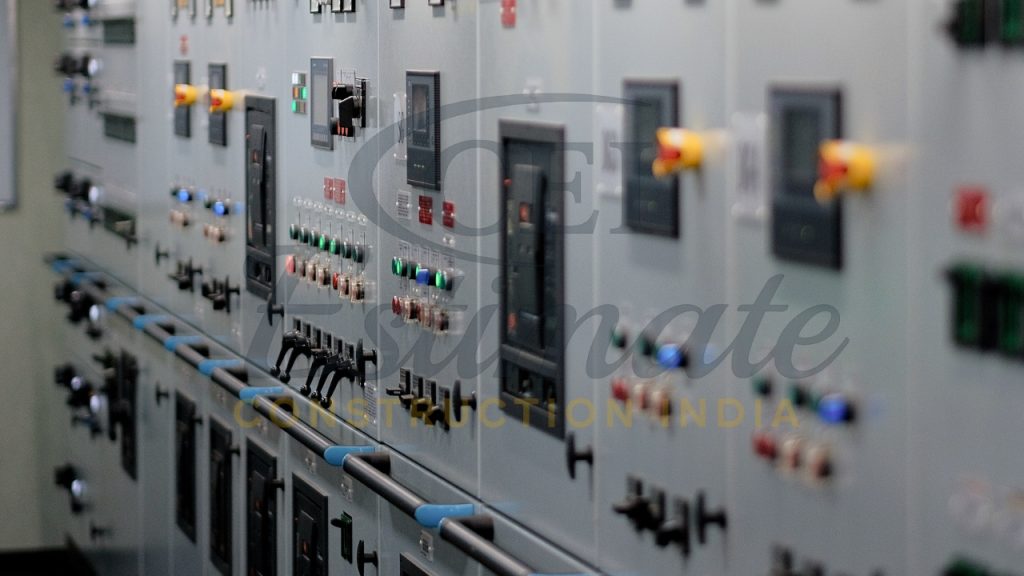
- Main distribution boards (MDBs), sub-distribution boards, and meter boxes.
- Essential for safe and efficient power management.
Backup Power Systems:
- Generators, inverters, UPS systems, and battery backups.
- Critical for uninterrupted power supply in commercial and industrial projects.
Safety Systems:
- Earthing systems, lightning arrestors, and fire alarms.
- Ensures compliance with Indian Electrical Standards (IEC).
Smart Home/Office Systems:
- Automation for lighting, HVAC, and security systems.
- Increasingly popular in premium residential and commercial projects.
Overheads and Miscellaneous:
- Tools, testing equipment, temporary power setups, and contingencies.
- Typically 5–10% of total electrical costs.
Each estimate is itemized, transparent, and updated with real-time market prices to reflect current economic conditions in India.
Electrical Cost Breakdown in India
Electrical costs in India vary based on project type, location, material quality, and system complexity. Below is an updated cost breakdown for different project types (as of August 2025):
Project Type | Cost per Sq. Ft. (INR) | Average Total Cost (1000 sq. ft.) |
Low-Cost Residential | ₹150 – ₹250 | ₹1,50,000 – ₹2,50,000 |
Standard Residential | ₹250 – ₹400 | ₹2,50,000 – ₹4,00,000 |
Premium Residential | ₹400 – ₹700+ | ₹4,00,000 – ₹7,00,000+ |
Commercial Buildings | ₹350 – ₹600+ | ₹3,50,000 – ₹6,00,000+ |
Industrial Projects | ₹400 – ₹800+ | ₹4,00,000 – ₹8,00,000+ |
Luxury Villas | ₹600 – ₹1,200+ | ₹6,00,000 – ₹12,00,000+ |
Institutional Buildings | ₹350 – ₹650+ | ₹3,50,000 – ₹6,50,000+ |
Note: Costs vary depending on:
- Location: Metro cities (e.g., Mumbai, Delhi) have higher labor and material costs than Tier-2 or rural areas.
- Material Choices: Branded wires (e.g., Finolex, Havells) and fixtures cost more than local alternatives.
- System Complexity: Smart systems or energy-efficient setups increase costs.
- Scale: Larger projects may benefit from bulk material discounts.
Major Components of Electrical Cost Estimation
Here’s a detailed breakdown of the key components driving electrical costs in India:
Wiring and Cabling:
- Scope: Installation of electrical wiring (single-phase or three-phase), conduits, and trunking systems.
- Cost Range: ₹80 – ₹200 per sq. ft.
- Key Factors: Copper vs. aluminum wiring, fire-resistant cables, and conduit types (PVC or metallic).
Electrical Fixtures and Fittings:

- Scope: Lighting fixtures, ceiling fans, power sockets, and switchboards.
- Cost Range: ₹100 – ₹300 per sq. ft.
- Key Factors: LED vs. traditional lighting, branded vs. generic fixtures, and decorative elements.
Panel Boards and Distribution:
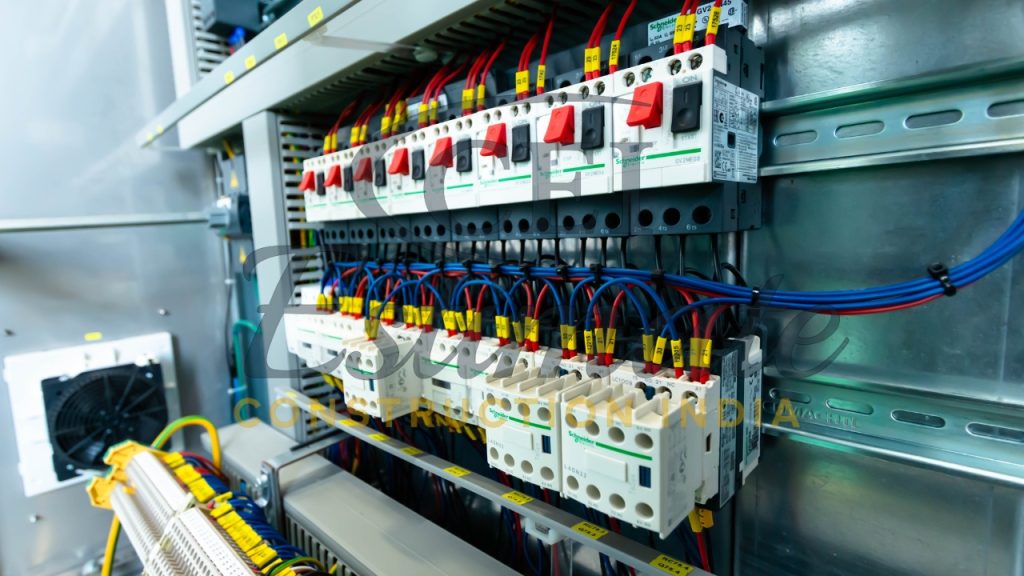
- Scope: Main panels, circuit breakers, MCBs (Miniature Circuit Breakers), and ELCBs (Earth Leakage Circuit Breakers).
- Cost Range: ₹50 – ₹150 per sq. ft.
- Key Factors: Load capacity and compliance with IS (Indian Standards) codes.
Backup and Safety Systems:
- Scope: Generators, inverters, earthing, and lightning protection systems.
- Cost Range: ₹20 – ₹100 per sq. ft.
- Key Factors: Power backup capacity and mandatory safety compliance.
Smart Systems and Automation (New Addition):
- Scope: Home automation, IoT-enabled lighting, and security systems.
- Cost Range: ₹50 – ₹200 per sq. ft.
- Key Factors: Integration with smart devices and scalability.
Overheads and Miscellaneous:
- Scope: Testing, temporary power setups, and contingencies.
- Cost Range: 5–10% of total electrical cost.
- Key Factors: Project duration and site accessibility.
Cost of Electrical Work for a 2BHK/3BHK Home in India
For a 1000 sq. ft. 2BHK or 3BHK home in a Tier-1 city (e.g., Bangalore, Pune), here’s a detailed electrical cost estimate:
Scope of Work | Estimated Cost (INR) |
Wiring and Cabling | ₹80,000 – ₹1,50,000 |
Lighting and Fixtures | ₹50,000 – ₹1,20,000 |
Panel Boards and Distribution | ₹30,000 – ₹70,000 |
Backup Systems (Inverter/Generator) | ₹20,000 – ₹50,000 |
Safety Systems (Earthing, ELCB) | ₹15,000 – ₹40,000 |
Smart Systems (Optional) | ₹30,000 – ₹1,00,000 |
Miscellaneous Costs (Overheads) | ₹15,000 – ₹30,000 |
Total Estimate | ₹2,40,000 – ₹4,60,000 |
Win More Projects With Us
Residential vs. Commercial vs. Industrial Electrical Costs
Type | Avg. Cost per Sq. Ft. | Complexity Level | Key Considerations |
Residential | ₹250 – ₹400 | Medium | Focus on aesthetics and user convenience. |
Commercial | ₹350 – ₹600+ | High | Emphasis on scalability and energy efficiency. |
Industrial | ₹400 – ₹800+ | Very High | Heavy-duty wiring and high-capacity systems. |
Institutional | ₹350 – ₹650+ | High | Specialized systems (e.g., hospitals, schools). |
Regional Electrical Cost Variations in India
Electrical costs vary across India due to differences in labor rates, material availability, and logistics:
Metro Cities (Delhi, Mumbai, Bangalore, Chennai):
- Cost: 20–30% higher due to premium labor rates and branded materials.
- Example: A 1000 sq. ft. residential electrical setup in Mumbai may cost ₹3,00,000–₹5,00,000.
Tier-2 Cities (Pune, Jaipur, Lucknow, Coimbatore):
- Cost: Moderate, with competitive labor rates and material options.
- Example: The same setup in Pune may cost ₹2,50,000–₹4,00,000.
Tier-3 Cities & Rural Areas:
- Cost: Lower labor charges but higher logistics costs for branded materials.
- Example: Costs may range from ₹2,00,000–₹3,50,000.
Geographical Factors (New Addition):
- Coastal Areas: Higher costs for corrosion-resistant wiring and fixtures.
- Hilly Regions: Increased labor costs due to accessibility challenges.
- Seismic Zones: Additional earthing and safety systems for stability.
Role of Technology in Electrical Cost Estimation
Technology is transforming electrical cost estimation, improving accuracy and efficiency:
Building Information Modeling (BIM):
- Integrates electrical layouts with 3D models for precise material takeoffs.
- Reduces errors in wiring and fixture estimates.
AI & Automation:
- Predicts material and labor requirements using historical data.
- Identifies cost-saving opportunities through optimization.
Electrical Design Software:
- Tools like AutoCAD Electrical and Revit streamline circuit design and cost calculations.
- Popular among engineers and contractors.
Cloud-Based Cost Databases (New Addition):
- Platforms like CostX provide real-time updates on material and labor prices.
- Ensure estimates align with current market trends.
Get High-Quality 3D Renderings Today!
Win more bids and close deals faster with high-quality 3D renderings.
Major Projects We Work
- Office Buildings
- Shopping Malls
- Hospitals
- Hotels & Resorts
- Factories
- Schools & Universities
- Apartment Complexes
- Independent Houses
Government Policies & Regulations Affecting Electrical Costs
Several regulations impact electrical costs in India:
Indian Electricity Rules (IER):
- Mandates compliance with safety standards for wiring, earthing, and equipment.
- Increases costs for safety systems like ELCBs and lightning arrestors.
GST on Electrical Materials:
- GST rates: Wires and cables (18%), lighting fixtures (12–18%), switches (18%).
- Impacts overall material costs.
Energy Efficiency Regulations:
- BEE (Bureau of Energy Efficiency) star ratings for appliances promote energy-efficient fixtures.
- Qualifies projects for green building incentives.
Labor Laws & Safety Regulations (New Addition):
- Compliance with minimum wage laws and electrician certifications increases labor costs.
- Mandatory PPE and safety training add to overheads.
Tips to Reduce Electrical Costs
Here are practical strategies to optimize your electrical budget:
Use Energy-Efficient Fixtures:
- Opt for LED lighting and BEE star-rated appliances to reduce long-term energy costs.
- Qualifies for green building subsidies.
Choose Local Brands:
- Brands like Anchor or Polycab offer cost-effective alternatives to premium brands like Havells.
- Reduces material costs without compromising quality.
Plan Electrical Layout Early:
- Finalize wiring and fixture plans before construction to avoid rework.
- Reduces labor and material wastage.
Bulk Purchase Materials (New Addition):
- Buying wires, fixtures, and panels in bulk can save 5–10%.
- Ensure proper storage to prevent damage.
Hire Certified Electricians:
- Skilled professionals prevent costly errors and ensure compliance.
- Saves on rework and safety penalties.
Incorporate Modular Systems (New Addition):
- Pre-assembled switchboards or plug-and-play systems reduce installation time.
- Ideal for residential and small commercial projects.
Get 5 New Projects in the Next 7 Days With Our System
Electrical Cost Trends in India (2023–2025)
Key trends affecting electrical costs:
- Rising Material Costs: Copper and aluminum prices have increased by 6–10% annually due to global demand.
- Skilled Labor Shortages: Urban areas face electrician shortages, driving wage hikes of 8–12% per year.
- Smart Technology Adoption: Growing demand for IoT-enabled systems increases initial costs but enhances functionality.
- Sustainability Push: Energy-efficient fixtures and solar integrations are raising upfront costs but lowering operational expenses.
Why Choose Electrical Estimator India?
At Electrical Estimator India, we leverage local expertise and advanced technology to deliver precise, transparent, and customized electrical cost estimates. Our services include:
- Detailed Reports: Itemized breakdowns for every electrical component.
- Real-Time Data: Updated material and labor rates specific to your region.
- Expert Consultation: Guidance on cost-saving strategies and material choices.
- Compliance Assurance: Estimates aligned with Indian Electricity Rules and local regulations.
Comprehensive Trade-Specific Estimates
At Construction Estimator India, we offer detailed cost estimates across all major trades, ensuring no part of your project is overlooked. From the foundation to the finishing touches, our trade-specific estimates provide you with a complete and accurate breakdown of costs for any type of construction project.

Our Simple Process to Get Your Estimate
01
Upload Plans
Submit your project plans, blueprints, or relevant documents through our online form or via email.
02
Receive Quotation
We’ll review your project details and send you a quote based on your scope and requirements.
03
Confirmation
Confirm the details and finalize any adjustments to ensure the estimate meets your project needs.
04
Get Estimate
Receive your detailed, trade-specific estimate within 1-2 business days, ready for your project execution.