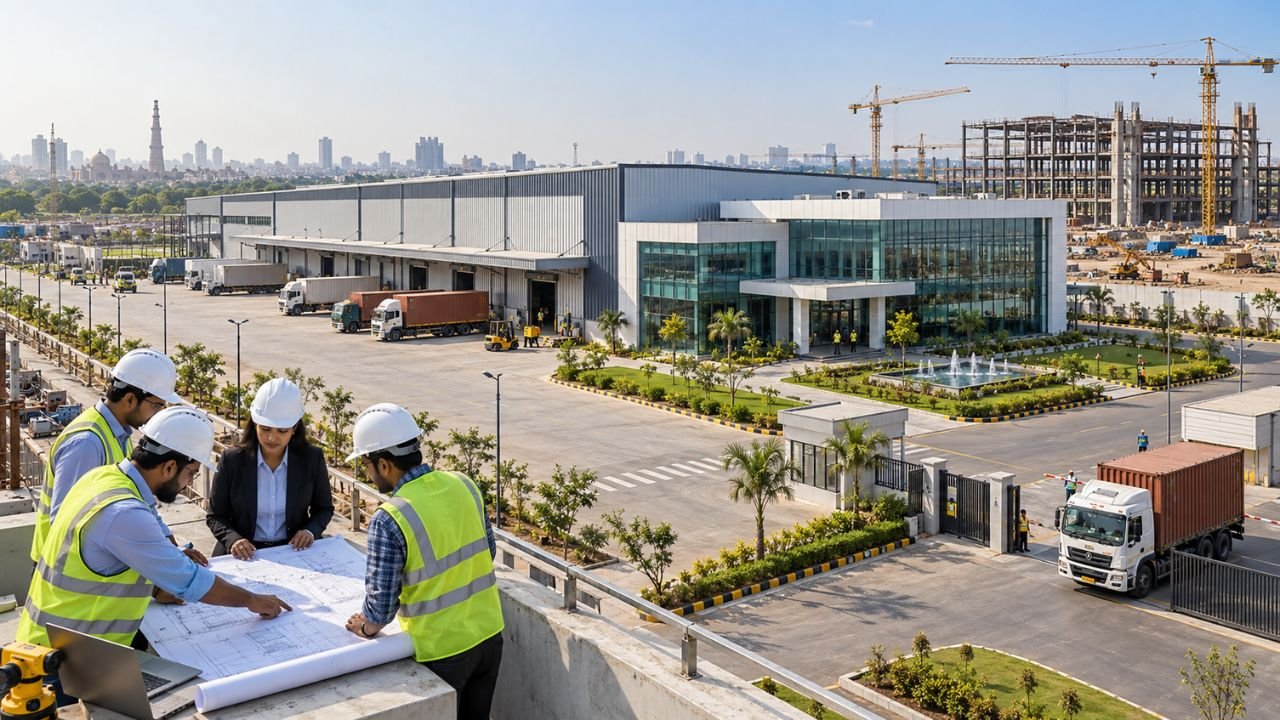
In the fast-paced world of Indian construction, the difference between a profitable project and a financial disaster often lies in a single document: the Bill of Quantities (BOQ). As an experienced quantity surveyor, I’ve seen countless contractors struggle with underquoting or losing lucrative tenders simply because their estimation lacked professional structure. Whether you are building a luxury villa in Noida or a commercial complex in Mumbai, using the best BOQ formats and samples in Excel for construction in India is no longer optional—it is a necessity for survival in 2026.
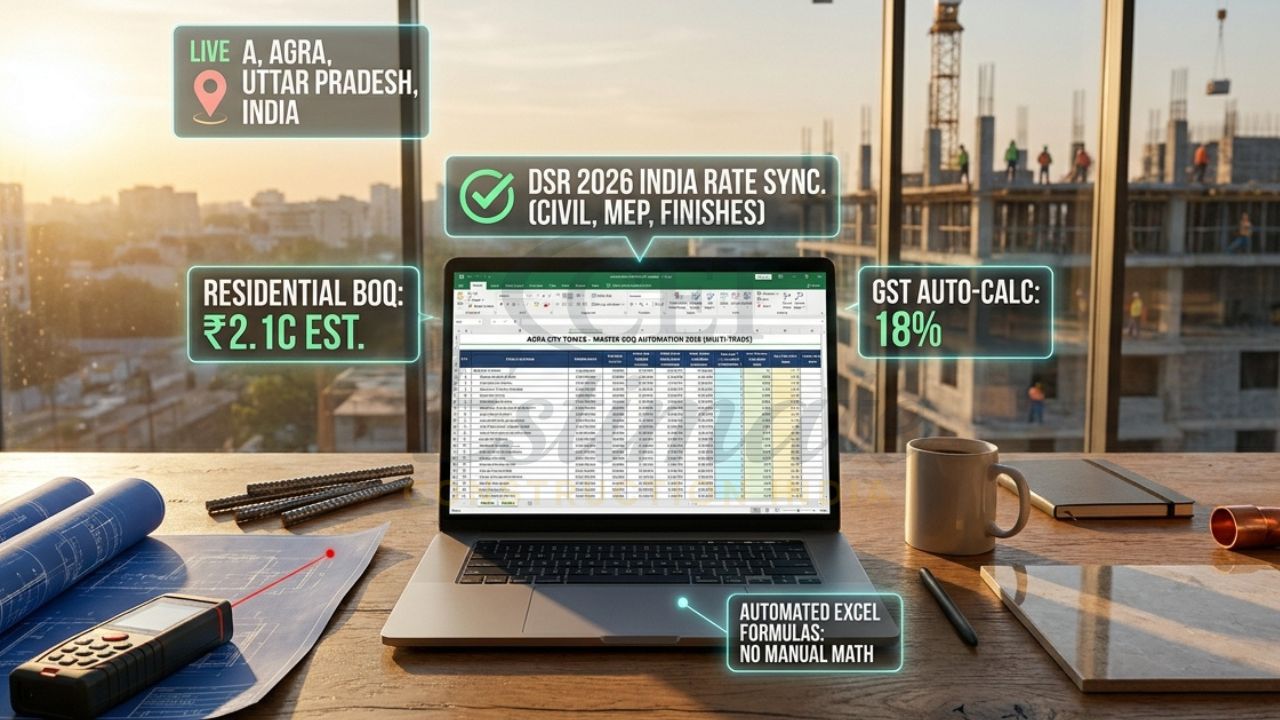
A well-prepared BOQ serves as a detailed cost blueprint, ensuring that every bag of cement and every hour of labor is accounted for before a single brick is laid. In 2026, with fluctuating material prices and strict GST compliance, a professional Excel-based BOQ prevents disputes and provides a transparent roadmap for both the client and the contractor. This guide will walk you through the most effective formats and industry-standard samples to elevate your estimation game.
What is a BOQ and Why Professional Formats Matter in 2026?
A Bill of Quantities (BOQ) is a comprehensive document prepared by a quantity surveyor or cost engineer that itemizes the materials, parts, and labor (and their costs) required for a construction project. In the 2026 Indian market, the stakes are higher than ever. With the integration of the Delhi Schedule of Rates (DSR) and various Public Works Department (PWD) norms into private contracts, clients expect a level of detail that manual notes simply cannot provide.
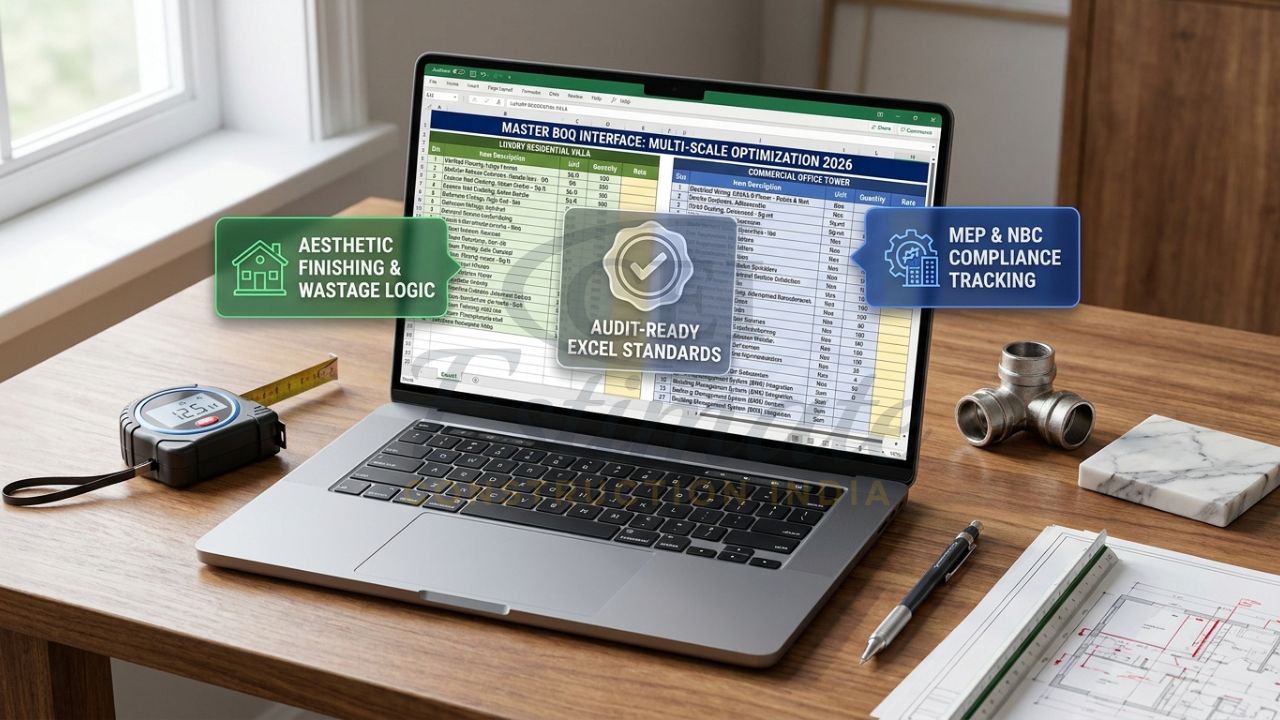
👉 Download Professional BOQ Templates – Manage Quantities, Rates & Costs in One Excel Sheet!
Professional formats matter because they eliminate the 10-20% error rate commonly found in manual calculations. An automated Excel format allows you to adjust local rates, calculate GST instantly, and ensure that your profit margins are protected against inflation. Moreover, a professional presentation wins more bids by building trust with consultants and institutional clients who require standardized data for evaluation.
Sample BOQ for House Construction Excel
For residential projects, accuracy is paramount to avoid the “budget creep” that often frustrates homeowners. A comprehensive sample BOQ for house construction Excel typically covers every stage from site clearing to the final coat of paint.
Based on 2026 regional rates, a standard 1500 sq.ft 2BHK G+1 house in a metro outskirts area is estimated to cost approximately ₹28.5 lakhs. A professional house BOQ is divided into several logical heads:
- Earthwork & Excavation: Costs for clearing the site and digging foundations.
- Concrete Work (RCC): Detailed breakdown of M20/M25 grade concrete for footings, columns, and slabs.
- Brick Masonry: Quantities for external 9-inch walls and internal 4.5-inch partitions.
- Flooring & Tiling: Including Vitrified tiles, Granite for stairs, and anti-skid tiles for bathrooms.
- Finishing Works: Plastering, painting (internal and external), and false ceilings.
Expert Tip: When using a house construction sample, always verify the Steel Reinforcement quantities. Steel prices are highly volatile; ensure your Excel sheet has a separate “Rate Analysis” tab to update these costs weekly.
Electrical BOQ for Commercial Building
Commercial projects demand a significantly higher level of complexity compared to residential ones. An electrical BOQ for commercial building must account for high load capacities, safety redundancies, and modern infrastructure like EV charging stations.
For a mid-sized IT park or office building in 2026, electrical costs can easily reach ₹55 lakhs. The format must include:
- LT Panels & Distribution Boards: Main switchgear and floor-wise distribution.
- Cabling & Wiring: Heavy-duty armored cables for mains and FRLS (Flame Retardant Low Smoke) wiring for internal points.
- Fire Alarm & Security: Integration of smoke detectors, heat sensors, and CCTV conduits.
- Modern Provisions: Solar-ready integrations and dedicated circuits for server rooms.
Unlike residential wiring, commercial electrical work is strictly governed by the National Building Code (NBC) and fire safety norms. Your Excel template should include columns for Make/Brand (e.g., Polycab, Havells, Schneider) to ensure the client knows exactly what quality they are paying for.
How to Prepare BOQ Document in Excel – Step-by-Step?
Preparing a BOQ from scratch can be daunting, but following a structured approach in Excel makes it manageable. Here is how to prepare BOQ document in Excel like a pro:
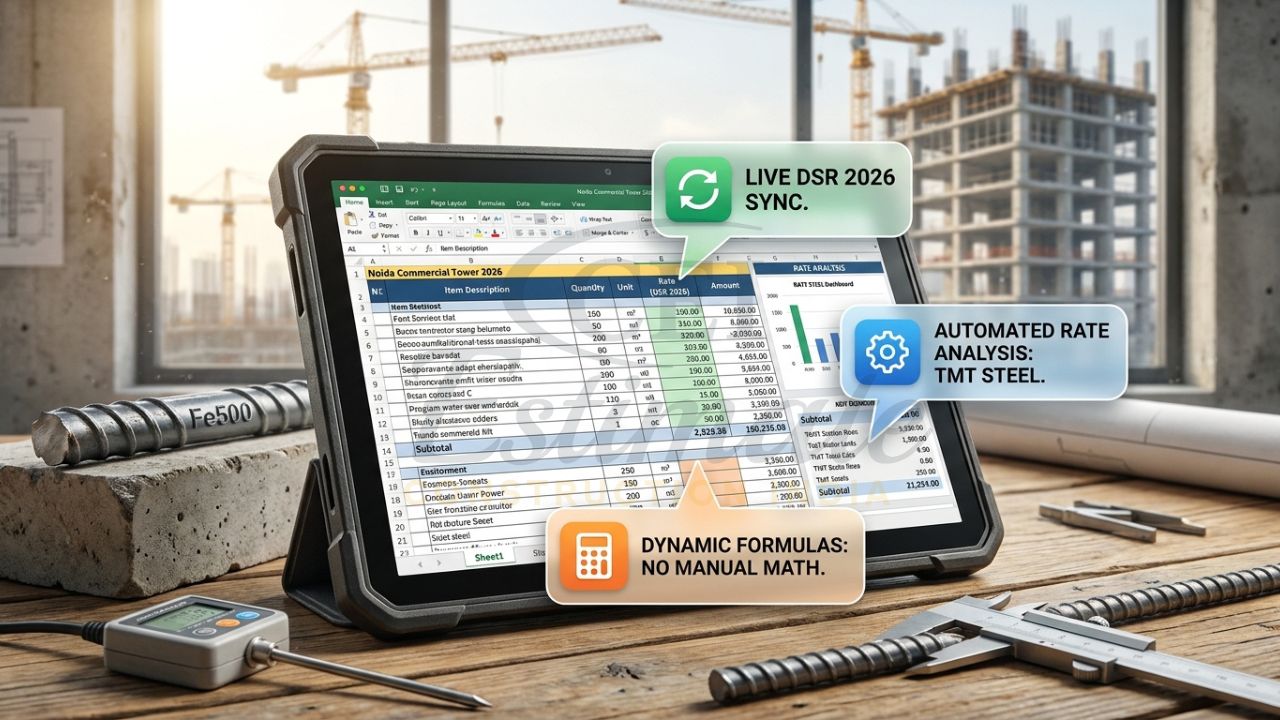
👉 Get Complete BOQ Format System – Create Client-Ready Estimates for Any Construction Project!
- Set Up Your Header: Include project name, client name, date, and version number. Use Bold fonts for clear identification.
- Define Your Columns: Standard columns include Item No., Description of Work, Unit (sq.m, cu.m, kg, etc.), Quantity, Rate, and Amount.
- Use Formulas for Automation: In the “Amount” column, use the formula = (Quantity * Rate). This ensures that if you change a quantity later, the total updates automatically.
- Organize by Work Groups: Group items under headings like “Civil,” “Plumbing,” or “Electrical” using the SUM function to get sub-totals for each section.
- Add Overheads & GST: Below the grand sub-total, add rows for Contractor’s Profit (usually 10-15%), Overheads (5%), and GST (18%).
- Formatting for Professionalism: Freeze the top panes so headers are always visible. Use subtle borders and light background colors for headers to make the document readable for evaluators.
Recommendation: Avoid vague descriptions. Instead of writing “Concrete work,” write “Providing and laying in position machine batched, machine mixed M25 grade RCC…” Precision prevents disputes during the billing stage.
Civil Work BOQ Excel Format
The core of any construction project is the civil work. A dedicated civil work BOQ Excel format focuses heavily on structural integrity and bulk material management. Professional templates designed for the Indian market align with current DSR (Delhi Schedule of Rates) norms to ensure the pricing is realistic.
Key sections in a civil BOQ include:
- Substructure: Piling, excavation, PCC (Plain Cement Concrete), and anti-termite treatment.
- Superstructure: RCC columns, beams, slabs, and staircase work.
- Masonry & Plastering: External and internal wall construction with specified mortar ratios (e.g., 1:4 or 1:6).
- Waterproofing: Specialized treatment for terraces, sunken slabs, and retaining walls.
Using an automated civil BOQ template can save a contractor between 20 to 30 hours of manual work per project. It also allows for quick “what-if” scenarios—for example, seeing how much the total cost changes if you switch from clay bricks to AAC blocks.
India BOQ Preparation Charges Per Sq Ft
If you are not using a template and prefer to hire a consultant, you need to be aware of the prevailing India BOQ preparation charges per sq ft in 2026.
The fees vary based on the complexity of the project and the level of detail required:
- Basic Estimation: ₹8 to ₹12 per sq.ft. This usually covers a basic list of materials and quantities.
- Detailed Tender BOQ: ₹15 to ₹25 per sq.ft. This includes a full rate analysis, GST breakdowns, and technical specifications suitable for government or large-scale private tenders.
- Metro Premium: In cities like Delhi, Mumbai, and Bangalore, expect a 20-30% premium on these rates due to higher operational costs for consultants.
For a 2,000 sq.ft residential project, hiring a consultant might cost you around ₹24,000 to ₹40,000. This is why many independent contractors and builders are switching to professional, ready-made Excel templates that cost significantly less (often starting at just ₹99) while providing the same level of accuracy and professional formatting.
👉 Upgrade Your BOQ with Smart Excel Templates – Handle House, Civil & Commercial Projects Easily!
Comparison Table: BOQ Formats for House, Civil & Commercial Projects
To help you choose the right format, here is a comparison of the different BOQ types used in the Indian construction industry:
| Feature | House Construction BOQ | Civil Work BOQ | Commercial/Industrial BOQ |
|---|---|---|---|
| Primary Focus | Finishing & Interior Aesthetics | Structural Integrity & Bulk Materials | Mechanical, Electrical & Plumbing (MEP) |
| Complexity | Moderate | High (Structural) | Very High (Compliance & Systems) |
| Key Units | sq.ft / sq.m | cu.m / kg (Steel) | Running Meters / Nos. |
| Typical Cost Basis | Lump sum per floor | Rate per item (DSR based) | Itemized with Brand Specs |
| Compliance Needs | Local Municipal Norms | PWD / CPWD Standards | NBC, Fire Safety, & ISO Norms |
| 2026 Cost Estimate | ₹1,800 – ₹2,500 per sq.ft | Varies by material volume | ₹3,500+ per sq.ft (Total) |
Conclusion
Mastering the best BOQ formats and samples in Excel for construction in India is a game-changer for any construction professional in 2026. A document that is precise, professionally formatted, and GST-compliant does more than just list costs—it demonstrates your expertise and protects your business from financial risk.
Whether you are just starting your journey or looking to streamline your existing estimation process, using automated templates is the most cost-effective way to save time and eliminate errors. Remember, a successful project starts long before the first shovel hits the ground; it starts with a perfect BOQ.
Ready to upgrade your estimation process? Download our professional, tender-ready Excel templates at File and start winning more projects today! For custom BOQ preparation services, contact our expert team at Person to get a quote tailored to your project needs.
Frequently Asked Questions (FAQs)
- Why is Excel better than specialized software for BOQs in India?
While software like Candy or Presto exists, Excel remains the industry standard in India because it is highly customizable, requires no subscription fees, and can be easily shared with clients who may not have specialized software. - Should I include GST in every item rate?
No. It is standard practice to keep item rates exclusive of GST and add the total GST (18% for most construction services) at the very end of the document to maintain transparency. - What is the biggest mistake in BOQ preparation?
The most common mistake is failing to include a “Contingency Fund” (usually 3-5%). Construction projects in India often face unforeseen site conditions or price hikes that can eat into your profit. - How often should I update the rates in my Excel template?
In the 2026 market, material rates (especially steel and cement) should be reviewed monthly. Labor rates are generally more stable but should be updated annually following regional wage revisions. - Are these templates suitable for bank loan purposes?
Yes. Professional Excel BOQs that follow a structured format are widely accepted by Indian banks (SBI, HDFC, ICICI) for home construction loans and project financing. - Can I use these formats for interior design projects?
Absolutely. You can modify the “Civil” section to focus on woodwork, laminates, hardware, and furniture items while keeping the same calculation logic. - How do I handle “Extra Items” during construction?
Always maintain a separate “Extra Item Statement” using the same Excel format. This ensures that any work done outside the original BOQ is tracked and billed correctly. - What is the role of a ‘Rate Analysis’ in a BOQ?
Rate analysis breaks down an item (e.g., 1 cu.m of brickwork) into its components (bricks, cement, sand, labor). It justifies your quoted rate if a client or consultant questions your pricing.