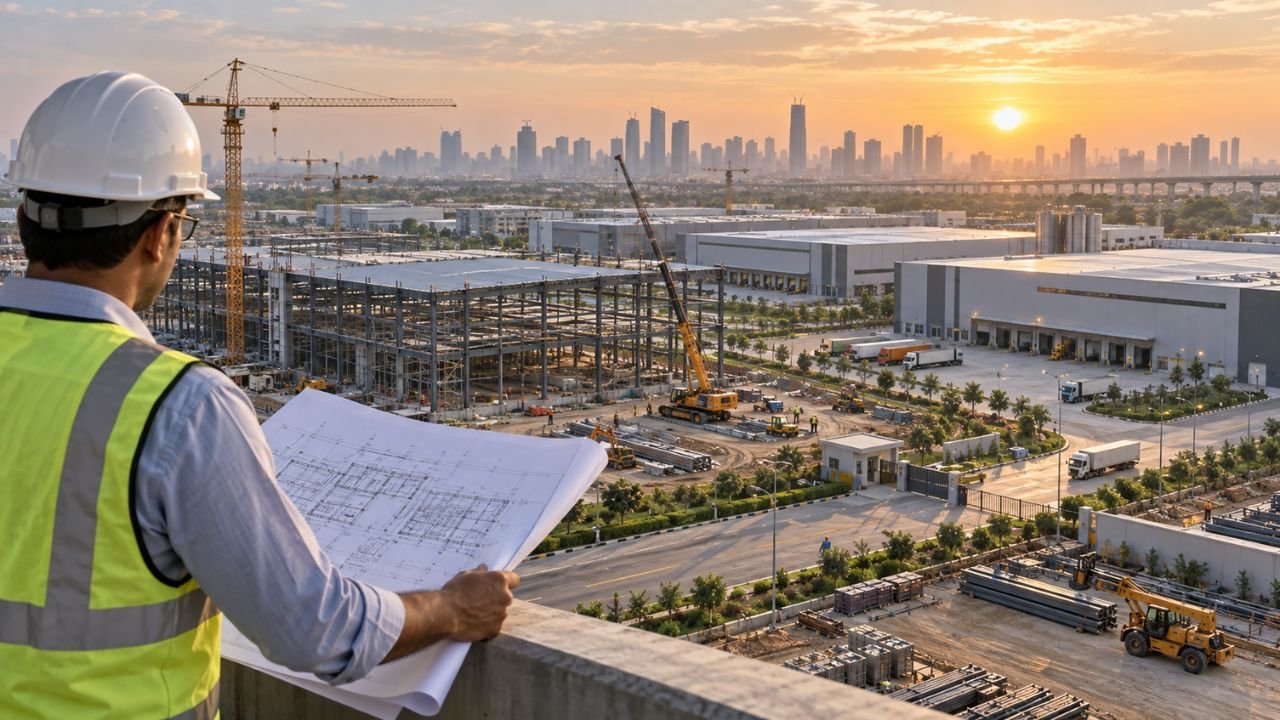
A well-drafted construction contract agreement format India is the foundation of every successful project. In 2026, with rising material costs, frequent scope changes, and faster project timelines, a clear and legally sound agreement protects both the owner and the contractor from disputes, delays, and financial losses. Whether you are building a G+1 house in Agra, a villa in Delhi NCR, or a commercial building in Lucknow, the right contract format ensures everyone knows their rights and responsibilities from day one.
Many contractors and property owners still use vague one-page agreements or WhatsApp terms, only to face problems during payment, quality issues, or project delays. A proper construction contract agreement is a legally enforceable document under the Indian Contract Act 1872. It defines scope, payment terms, timelines, quality standards, and dispute resolution mechanisms. Before drafting your agreement, it is essential to understand the current construction cost per sq ft in India to ensure the financial clauses reflect 2026 market realities.
This detailed guide explains the standard format used across India in 2026, key clauses you must include, different types of contracts, and practical sample wording you can adapt for your next project.
What is a Construction Contract Agreement in India?
A construction contract agreement is a written document signed by the owner (employer) and the contractor that records the terms under which the contractor will carry out the construction work. It is governed by the Indian Contract Act 1872 and must contain offer, acceptance, consideration, and lawful object to be valid.
In simple terms, it converts verbal understanding into a binding legal document. Unlike a casual “agreement on stamp paper,” a proper construction contract agreement format India clearly defines the scope of work, price, timelines, and remedies in case of breach. In 2026, most government tenders on GeM and CPPP, as well as private developers, insist on detailed agreements to avoid future litigation and also in 2026, most government projects and private developers move away from casual agreements toward formal sets of bid documents in construction explained to ensure total transparency.
Types of Construction Contracts Commonly Used in India 2026
Different projects need different contract types. Choose the right one before drafting the agreement:
- Item Rate Contract — Most common in India. Payment is made as per actual measured quantities at quoted unit rates. Ideal for residential projects where quantities may vary slightly.
- Lump Sum Contract — Fixed total price for the entire scope. Used when drawings and specifications are complete and changes are not expected. Risk of quantity variation lies with the contractor.
- Turnkey / EPC Contract — Contractor handles everything from design to handover. Popular for industrial and large commercial projects.
- Labour Contract — Owner supplies all materials; contractor supplies only labour. Common in small house projects in Tier-2 cities like Agra.
- Percentage Rate Contract — Contractor quotes a percentage above or below the estimated rates in the schedule.
For most residential G+1/G+2 houses in Uttar Pradesh, item rate or lump sum contracts are preferred.

Standard Construction Contract Agreement Format in India
A professional construction contract agreement format India follows this standard structure:
- Title and Date — “Construction Contract Agreement” with date and place.
- Parties to the Agreement — Full names, addresses, and PAN of Owner and Contractor.
- Recitals (Whereas Clauses) — Background of the project.
- Definitions — Key terms like “Works”, “Contract Price”, “Defects Liability Period”.
- Scope of Work — Detailed description with reference to drawings and specifications.
- Contract Price and Payment Terms — Total amount, milestone payments, GST, taxes.
- Time for Completion — Start date, completion date, and extension provisions.
- Variations and Extra Items — Procedure for approving changes.
- Quality, Testing, and Inspection — Standards and frequency of tests.
- Defects Liability Period — Usually 12 months after handover.
- Insurance, Indemnity, and Force Majeure — Who bears what risk.
- Dispute Resolution and Arbitration — As per Arbitration and Conciliation Act.
- Termination Clause — Conditions for ending the contract.
- Signatures and Witnesses — Both parties and two witnesses.
- Financial Annexures: Every contract must include a formal BOQ format in Excel for construction as an annexure to define itemized costs.
Add schedules for BOQ, drawings list, and approved makes.
Choose Your Construction Services
Connect with verified experts for your project. We provide professional
General Contractors, Sub-contractors, Builders, and Material Suppliers.
Our network also includes specialized 3D Rendering Developers and Interior Experts.
Essential Clauses Every Construction Contract in India Must Have
Include these non-negotiable clauses:
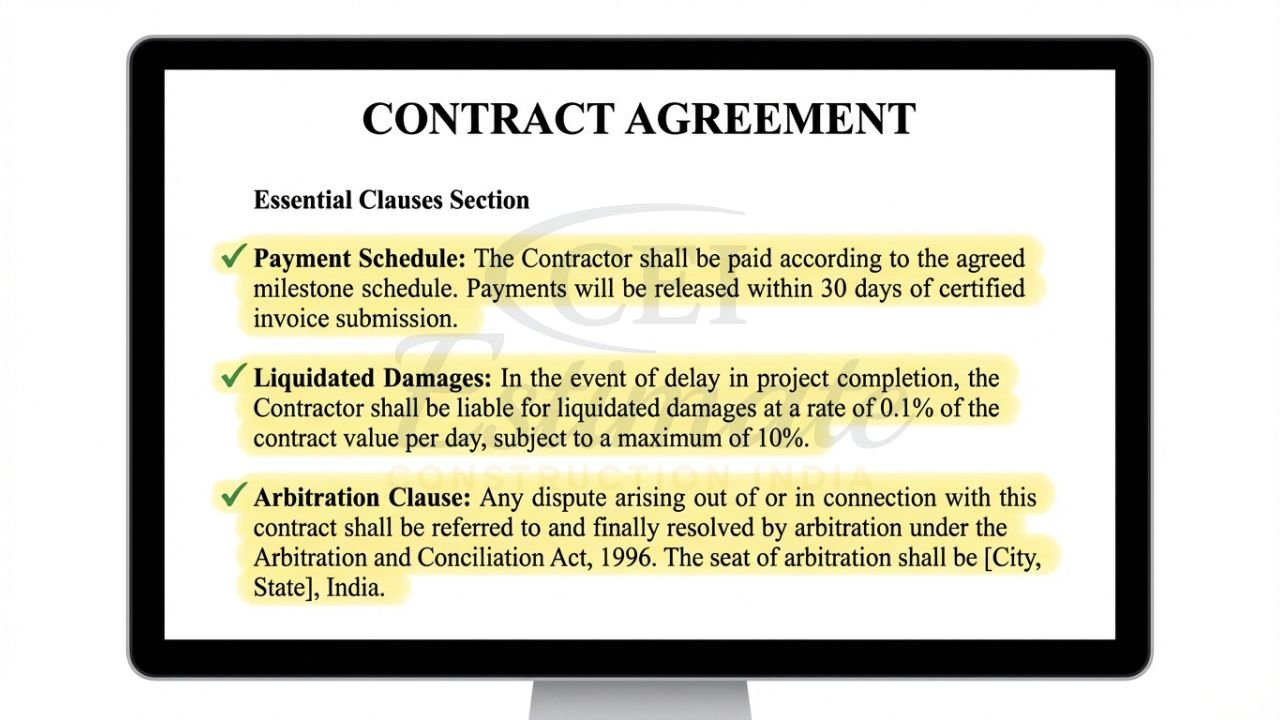
- Payment Schedule — Milestone-linked payments (e.g., 10% advance, 30% on plinth, 30% on slab, etc.) with 5–10% retention.
- Liquidated Damages — ₹500–₹2,000 per day for delay (maximum 10% of contract value).
- Variations — Written approval required; rates as per contract or mutually agreed.
- GST Clause — Clearly mention whether rates are inclusive or exclusive of GST.
- Force Majeure — Covers pandemics, floods, strikes beyond control.
- Defects Liability — Contractor responsible for rectifying defects for 12 months.
- Arbitration Clause — “Any dispute shall be referred to arbitration under the Arbitration and Conciliation Act 1996, seated in [City].”
- Governing Law — “This agreement shall be governed by the laws of India.”
The Digital Era of Contracts
In 2026, many contractors first encounter these contract terms during the e-tendering in construction process. Knowing how to fill tender documents step by step is the first step toward signing a formal agreement with government bodies like the PWD or NHAI.
Prequalification and Compliance
For high-value projects, the contract isn’t just about the work; it’s about who is doing it. Often, a firm must pass the prequalification in construction tender stage, proving their financial turnover and technical experience before they are even eligible to sign the final contract agreement.
Sample Construction Contract Agreement Format (Key Sections)
Sample Clause – Scope of Work
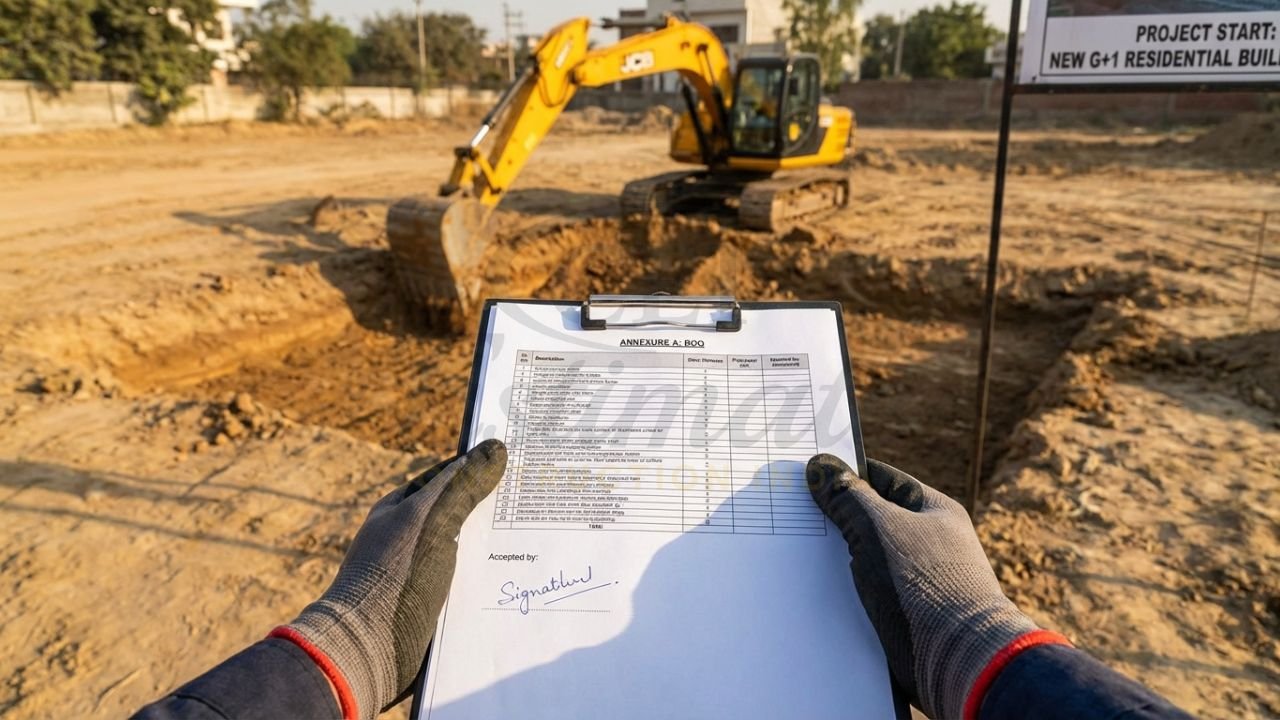
“The Contractor shall execute and complete the construction of a G+1 residential building as per the drawings, specifications, and BOQ attached as Annexure A, including civil, electrical, plumbing, and finishing works.”
Sample Clause – Payment Terms
“Payments shall be released as per the following milestones:
- 10% mobilization advance against bank guarantee
- 25% on completion of foundation and plinth
- 30% on completion of superstructure and slab
- 25% on completion of finishing and handover
- 10% after Defects Liability Period”
Sample Clause – Arbitration
“In case of any dispute arising out of this agreement, the same shall be referred to a sole arbitrator appointed by mutual consent or as per the Arbitration and Conciliation Act 1996. The venue of arbitration shall be Agra and the language shall be English.”
You can adapt these clauses for your specific project.
Important Legal Considerations & Stamp Duty in 2026
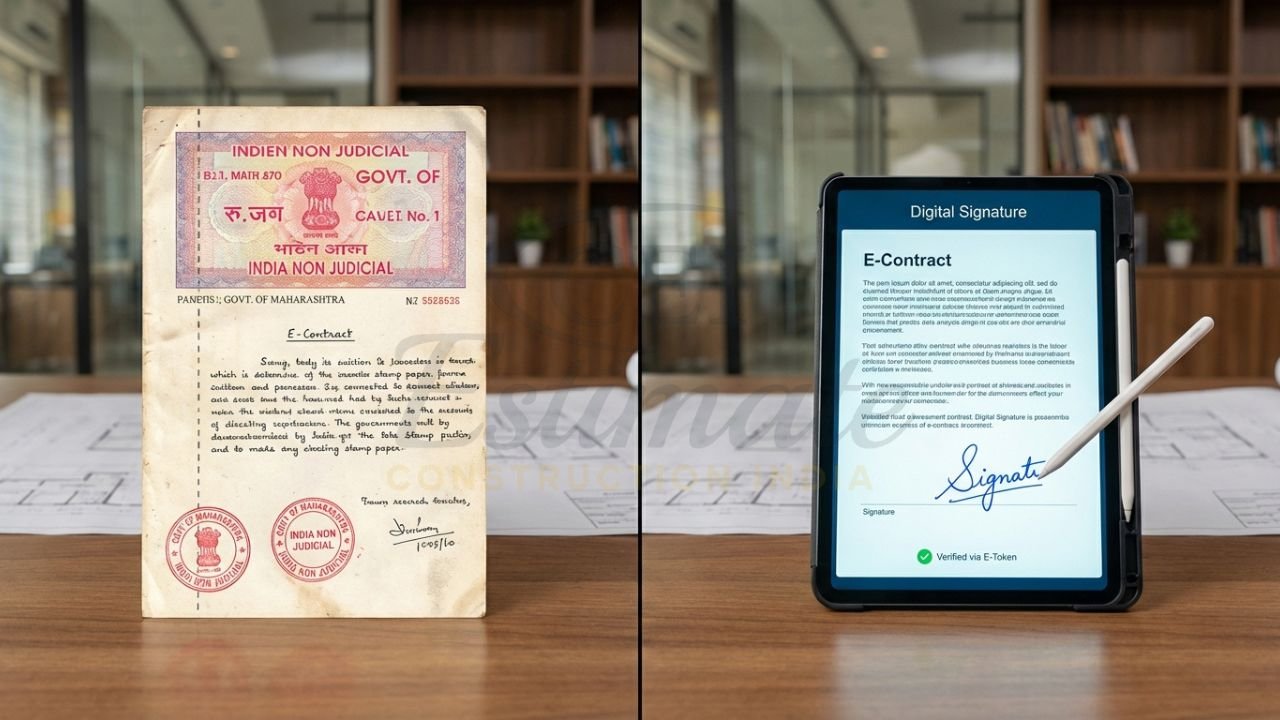
- Stamp Duty — Varies by state. In Uttar Pradesh it is 2%–5% of contract value for construction agreements (check local notification).
- Registration — Mandatory in many states if value exceeds ₹1 lakh.
- GST — 18% on construction services; mention clearly whether inclusive or exclusive.
- Digital Agreements — E-signed contracts are now legally valid under the Information Technology Act.
Always get the agreement drafted or reviewed by a lawyer familiar with construction matters.
Common Mistakes to Avoid in Construction Contract Agreements
- Using a generic template without customization.
- Vague scope of work leading to disputes.
- No clear payment milestones.
- Missing arbitration clause.
- Incorrect stamp duty or non-registration.
- Ignoring GST implications.
- No provision for force majeure or price escalation.
- One-sided clauses that discourage contractors.
- Not attaching drawings and BOQ.
- Signing without witnesses.
Tips for Reviewing or Drafting a Strong Construction Agreement in 2026
- Use plain language that both parties understand.
- Cross-reference all annexures (drawings, BOQ, specifications).
- Balance rights and obligations.
- Include a dispute escalation matrix before arbitration.
- Get it reviewed by a construction lawyer.
- Keep one signed copy with each party and a scanned copy for records.
How to Win More Construction Bids in India 2026 explains how a strong contract strengthens your bid.
Conclusion
A professionally drafted construction contract agreement format India is your best protection in 2026’s competitive market. It clearly defines scope, payment terms, timelines, quality standards, and remedies, reducing the chances of disputes and delays. Whether you use an item rate, lump sum, or turnkey format, always include the essential clauses discussed above and ensure proper stamp duty and registration.
Never sign a contract without reading every page. For small residential projects you can start with the sample clauses in this guide, but for projects above ₹50 lakh it is wise to involve a lawyer. A strong agreement not only safeguards your interests but also builds trust and ensures smooth project execution.
Ready to get an accurate, customised construction estimate for your project in 2026?
At Estimator Construction India our professional estimating team delivers detailed BOQ and cost reports in just 48 hours.
Construction cost estimation services start at just ₹10,000 INR only.
Contact us today:
📞 Phone / WhatsApp: +91 86306 76890
✉️ Email: info@constructionestimatorindia.com
Don’t overpay or underbid — get your precise 2026 construction cost per sq ft estimate now and win more projects with confidence!
Frequently Asked Questions (FAQs) – Construction Contract Agreement Format India
What is the standard format of a construction contract agreement in India 2026?
The standard construction contract agreement format India includes parties, recitals, scope of work, contract price, payment terms, timelines, variations, quality standards, defects liability, insurance, arbitration, and signatures. It is usually prepared on stamp paper of appropriate value and references drawings, BOQ, and specifications as annexures. Most contractors use item rate or lump sum formats depending on project type.
What are the most important clauses in a construction contract in India?
The most critical clauses are payment schedule, time of completion with liquidated damages, variations and extra items, defects liability period, force majeure, insurance, indemnity, GST treatment, and arbitration. These clauses protect both owner and contractor and are standard in all construction contract agreement format India documents in 2026.
Is stamp duty mandatory on construction contract agreements in India?
Yes, stamp duty is mandatory and varies by state (2%–5% in Uttar Pradesh). The agreement must be executed on non-judicial stamp paper of the required value and registered if the value exceeds the state threshold. Proper stamping and registration make the contract legally enforceable.
What is the difference between lump sum and item rate construction contract?
In a lump sum contract, the contractor agrees to a fixed total price for the entire scope. In an item rate contract, payment is made as per actual measured quantities at quoted unit rates. Item rate is more common in India because quantities can vary slightly during execution.
Can I use a simple one-page agreement for small residential construction projects?
For very small works (under ₹10 lakh) a simple agreement may suffice, but it is risky. Even for small residential projects it is advisable to use a proper multi-page agreement covering scope, payment milestones, timeline, and dispute resolution. A well-drafted agreement prevents future misunderstandings.