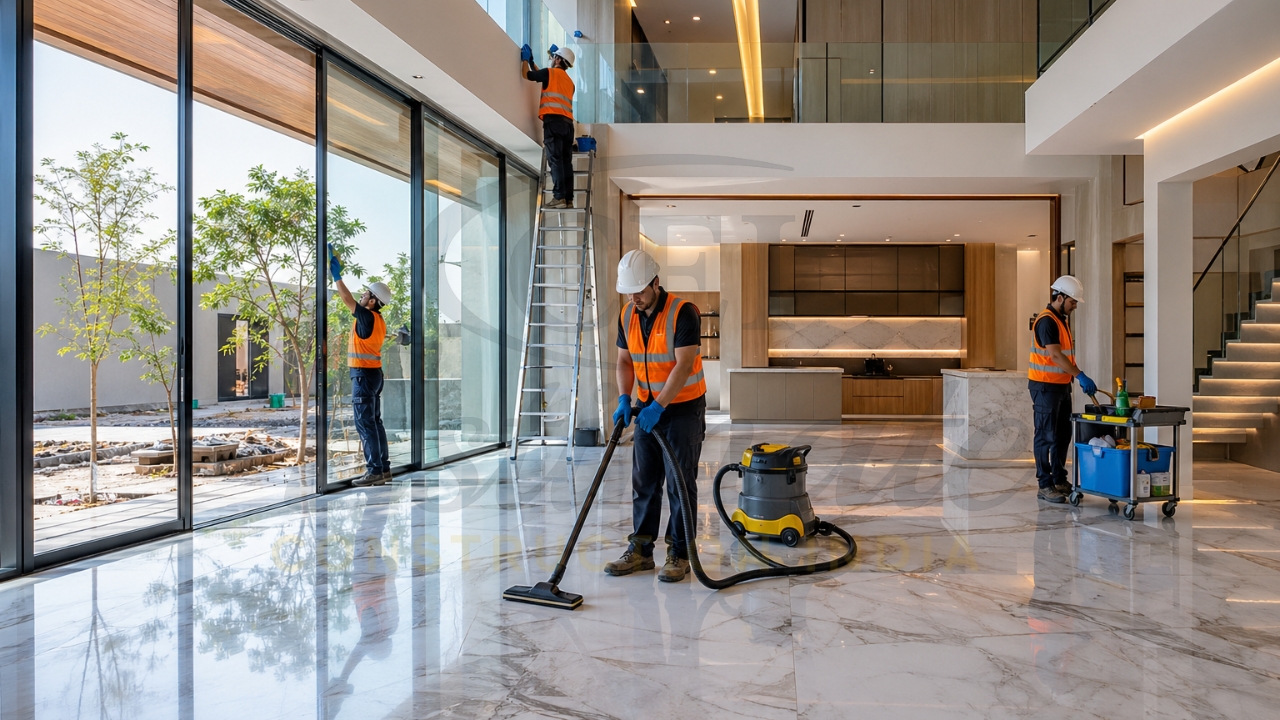
After construction or renovation work is completed, post-construction cleaning becomes the final operational step before a property can be handed over for use. Whether the project involves a private residence, a renovated commercial space, or a newly built unit, the quality of post-construction cleaning directly impacts inspections, walkthroughs, air quality, surface preservation, and the overall perception of the finished project.
Unlike routine residential or office cleaning, post-construction cleaning is a process-driven task that requires strict sequencing, appropriate tools, and an understanding of how construction dust, residues, and materials behave. When handled incorrectly, it can compromise newly installed surfaces, delay project close-out, or lead to costly rework.
This guide brings together practical recommendations based on real field experience to help homeowners and construction teams better understand how post-construction cleaning should be organized, executed, and evaluated.
What Is Post-Construction Cleaning and Why It Matters ?
Post-construction cleaning is a structured cleaning process performed after construction, renovation, or remodeling work is completed. It typically includes:
- removal of construction debris and packaging materials;
- elimination of fine dust from all exposed and hidden surfaces;
- cleaning of floors, fixtures, cabinetry, and installed elements;
- safe handling of chemical residues such as paint, adhesive, grout, and sealant; ● preparation of the property for final walkthroughs and handover.
In professional construction workflows, post-construction cleaning is not merely cosmetic. It plays a role in safety, indoor air quality, surface longevity, and readiness for inspection or occupancy. Skipping steps or performing tasks out of sequence often results in recontamination, surface damage, or incomplete results.
Expert Perspective
Tetiana Rakhmanska is the founder of Wow Now Cleaning, a Florida-based cleaning company operating in the Tampa area. Her professional background combines service-oriented business development with hands-on operational experience.
Tetiana began her career in New York, later returning to Ukraine where she built and managed a hospitality-focused photography business. This experience shaped her approach
to service delivery, attention to detail, and client experience. After relocating to the United States during the war, she co-founded Wow Now Cleaning with a focus on structured processes, quality control, and accountability.
Over the past two years, the company has worked with residential clients and construction-related projects across Florida, applying standardized post-construction cleaning protocols designed to support project close-out rather than one-time service visits. More information about the company’s operational approach and case experience is available at https://wownowcleaning.com/.
Core Principles of Effective Post-Construction Cleaning Planning and Sequencing
Post-construction cleaning should always follow a clear sequence. Large debris and leftover materials are removed first, followed by dry dust removal, and only then wet cleaning. This approach minimizes the risk of redistributing dust and protects newly finished surfaces.
From a project management perspective, proper sequencing reduces rework and supports smoother final inspections.
Proper Tools and Materials
High-efficiency equipment significantly improves outcomes. This includes HEPA-filtered vacuums, microfiber materials, non-abrasive brushes, and surface-appropriate cleaning agents. Steam cleaners may be effective for certain applications but must be used with caution on sensitive materials.
Using incorrect tools or aggressive chemicals is a common cause of damage during post-construction cleaning.
Safety First
Construction environments often contain sharp debris, fine particulate matter, and chemical residues. Personal protective equipment such as gloves, masks, and eye protection is essential. Adequate ventilation is equally important, especially when working in enclosed or newly sealed spaces.
Top-to-Bottom Cleaning Logic
Dust settles downward. Cleaning should begin with ceilings, light fixtures, shelves, and ventilation grilles before addressing walls and floors. Ignoring this principle often results in repeat contamination and wasted effort.
Ventilation and Airflow
Proper airflow during and after cleaning helps remove airborne dust and lingering odors from paints and adhesives. Whenever possible, windows and doors should remain open to support air circulation throughout the property.
Step-by-Step Organization of Post-Construction Cleaning
Step 1: Debris Removal and Area Preparation
All large construction waste, packaging, and leftover materials should be removed first. This step improves safety and allows cleaning teams to move efficiently throughout the space.
Step 2: Dry Dust Removal
Using HEPA-filtered vacuums, all accessible surfaces should be vacuumed, including floors, walls, window frames, cabinetry exteriors, and door frames. This step targets fine construction dust that remains after building work.
Step 3: Wet Surface Cleaning
After dry removal, surfaces are wiped with damp (not overly wet) microfiber cloths. Special attention should be given to high-touch areas such as handles, switches, and trim, as well as horizontal surfaces where dust accumulates.
Step 4: Treatment of Residual Materials
Paint splatter, adhesive residue, grout haze, or sealant marks may require specialized products. All chemicals should be tested on inconspicuous areas to avoid surface damage.
Step 5: Final Ventilation and Detail Work
The final stage includes airing out the property, polishing glass and mirrors, and performing a last floor cleaning. At this point, the space should be visually clean, safe, and ready for walkthrough or occupancy.
DIY vs. Professional Cleaning: Practical Considerations
Homeowners often consider handling post-construction cleaning independently. While this may be feasible for small projects, larger renovations or new builds introduce higher risks.
Tasks Better Suited for Professional Teams
- deep removal of fine dust from ventilation systems and fixtures;
- chemical-intensive cleaning requiring surface-specific knowledge;
- handling of heavy or sharp construction debris;
- meeting timelines aligned with inspections and handovers.
Risks of Improper Self-Cleaning
- damage to new finishes;
- incomplete dust removal affecting air quality;
- extended project timelines;
- physical strain or injury.
For construction and remodeling teams, outsourcing post-construction cleaning allows internal crews to focus on core build tasks while ensuring the property meets final presentation and safety standards.
Material-Specific Cleaning Considerations
Different materials require different approaches:
- Wood and laminate: Sensitive to moisture and harsh chemicals; require lightly damp cleaning and neutral agents.
- Stone and tile: Natural stone needs pH-neutral products, while tile surfaces are more durable but require careful grout cleaning.
- Glass and metal: Non-abrasive tools prevent scratches and streaks. ● Upholstery and textiles: Should be vacuumed first; spot treatments must be tested before full application.
Understanding material behavior is critical to preserving finishes and avoiding costly repairs.
Additional Practical Recommendations
- Document the condition of the property before cleaning begins.
- Use reusable and environmentally responsible materials when possible. ● Allocate cleaning work in phases to avoid fatigue and errors.
- Pay attention to overlooked areas such as vents, light fixtures, and corners.
Conclusion
Post-construction cleaning is a demanding but manageable process when approached systematically. For homeowners, it reduces stress and helps transition smoothly into a finished space. For construction and remodeling teams, it supports project close-out, inspections, and final client impressions.
A structured, process-driven approach—such as the one described by Tetiana Rakhmanska based on field experience in Florida—demonstrates that post-construction cleaning is not an afterthought, but a critical final phase of any successful build or renovation.
Author: Khrystyna Boiko
Publication Date: April 15, 2026