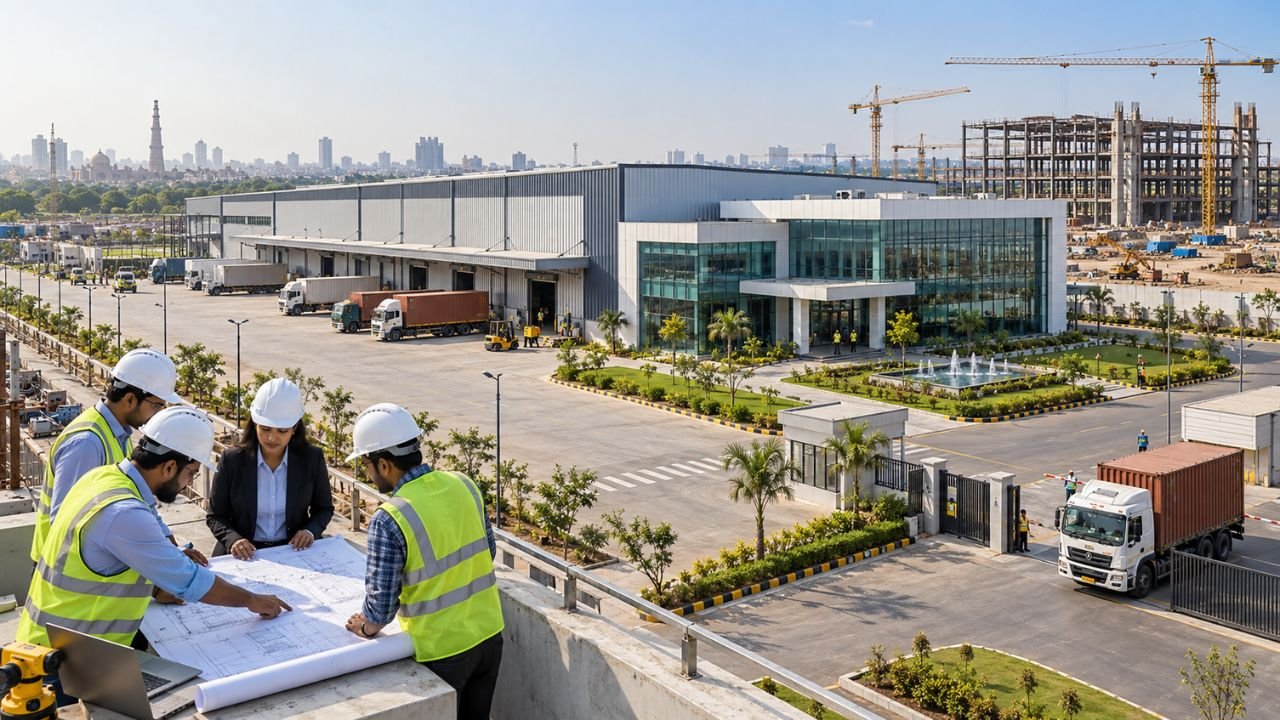
As India marches toward its goal of becoming a $5 trillion economy, the manufacturing sector has emerged as the cornerstone of this ambition. In 2026, the landscape of Indian manufacturing is undergoing a seismic shift, driven by the Make in India initiative, lucrative Production Linked Incentive (PLI) schemes, and a massive push for exports. From the bustling industrial hubs of Gujarat and Maharashtra to the emerging manufacturing corridors in Tier-2 and Tier-3 cities, factories are no longer just physical production sites—they are becoming data-driven ecosystems. Adopting Industry 4.0 technologies is no longer a luxury but a survival mandate for MSMEs and large conglomerates alike.
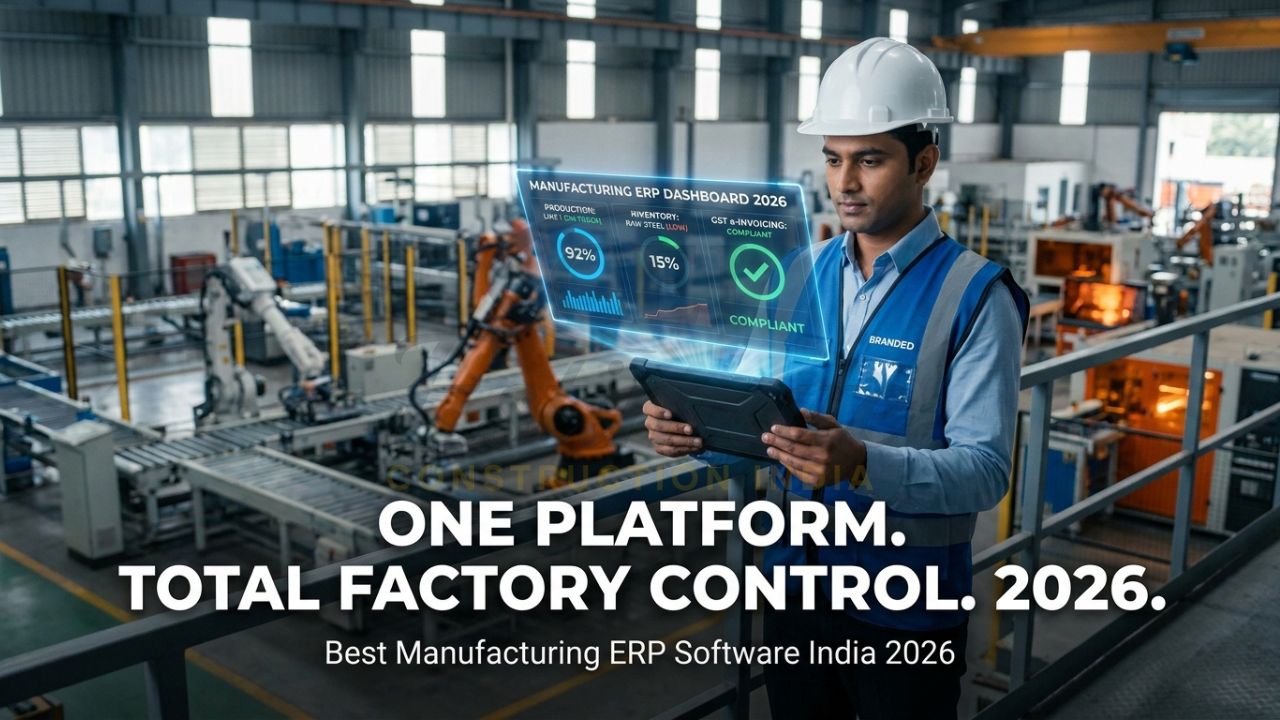
However, with this growth comes unprecedented complexity. Manufacturers today must navigate the intricacies of global supply chain disruptions, fluctuating raw material prices, and a stringent regulatory environment. Managing floor-level production, multi-location inventory, complex Bill of Materials (BOM), and multi-state GST compliance through manual spreadsheets or outdated legacy systems is a recipe for inefficiency. This is where a robust ERP software for manufacturing industry in India becomes indispensable. A modern ERP acts as the central nervous system of a factory, integrating every department—from procurement and production to finance and sales—into a single, real-time source of truth.
The right manufacturing ERP software India empowers business owners to reduce operational costs by identifying wastage, improving production efficiency through better scheduling, and scaling their businesses profitably. Whether you are a small-scale plastic component manufacturer or a large-scale automotive OEM, selecting the best ERP for manufacturing companies India 2026 is perhaps the most critical technology decision you will make this decade.
Why Manufacturing Companies in India Need ERP Software in 2026?
The Indian manufacturing environment is uniquely challenging. Manufacturers often face raw material price volatility (especially in steel, cement, and chemicals), power inconsistencies, and a complex labor landscape. Without a dedicated ERP system for manufacturers India, these challenges manifest as high wastage, production delays, and inventory mismatches that eat into the thin margins typical of the sector.
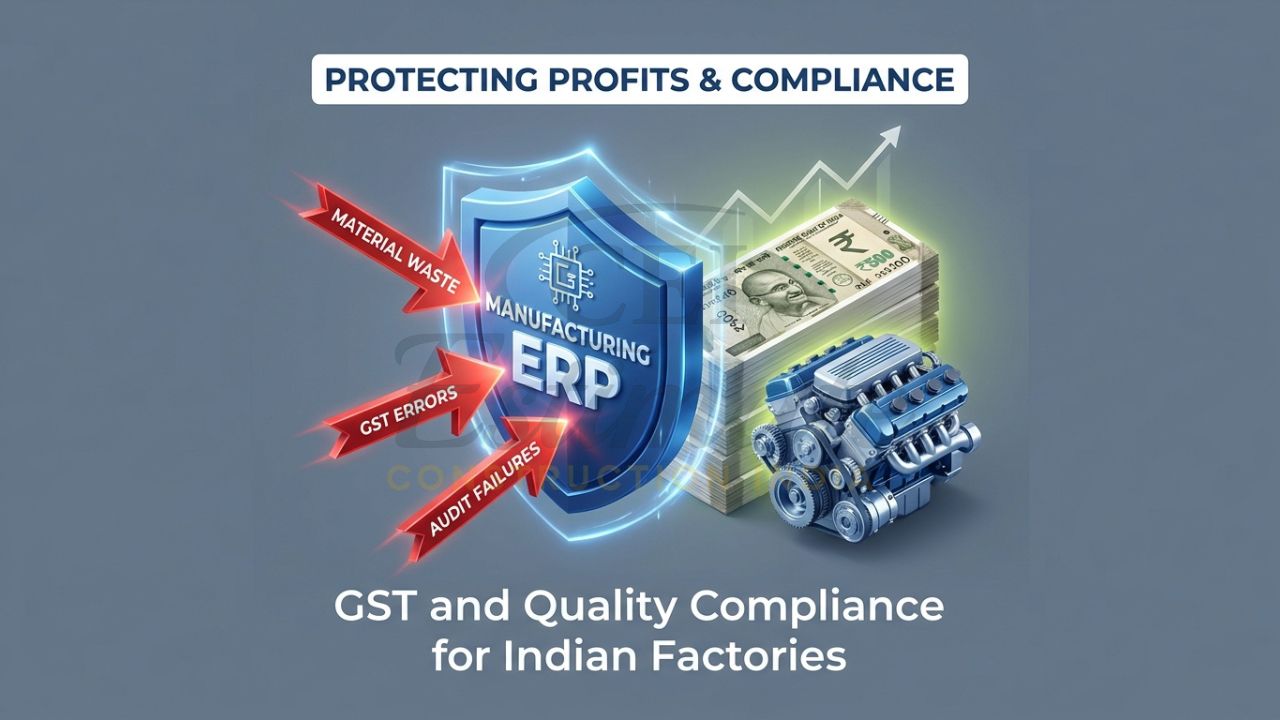
👉 Choose the Right ERP for Manufacturing – Track Production, Costs & Supply Chain Seamlessly!
One of the primary drivers for ERP adoption in 2026 is the need for real-time visibility. When you have multiple production lines or plants across states like Tamil Nadu and Haryana, knowing exactly where your work-in-progress (WIP) stands is vital for meeting delivery deadlines. Furthermore, the pressure of cash flow management is constant; manual RA billing and delayed reconciliation can paralyze a factory’s operations.
Key benefits of implementing a production management ERP India include:
- Reduced Downtime: Predictive maintenance modules ensure machines are serviced before they break down, keeping the production line moving.
- Accurate Product Costing: ERPs provide a granular view of costs, including direct labor, overheads, and material scrap, allowing for more competitive yet profitable pricing.
- Seamless Compliance: Automated TDS deductions, GST e-invoicing, and RERA-style transparency for industrial projects ensure you stay on the right side of the law without manual effort.
- Data-Driven Decisions: Instead of “gut feelings,” managers use AI-powered dashboards to identify bottlenecks and optimize resource allocation.
Must-Have Features in ERP Software for Manufacturing Industry
When evaluating a cloud ERP for manufacturing India, it is essential to look for features localized for the Indian market and the specific nuances of factory operations:
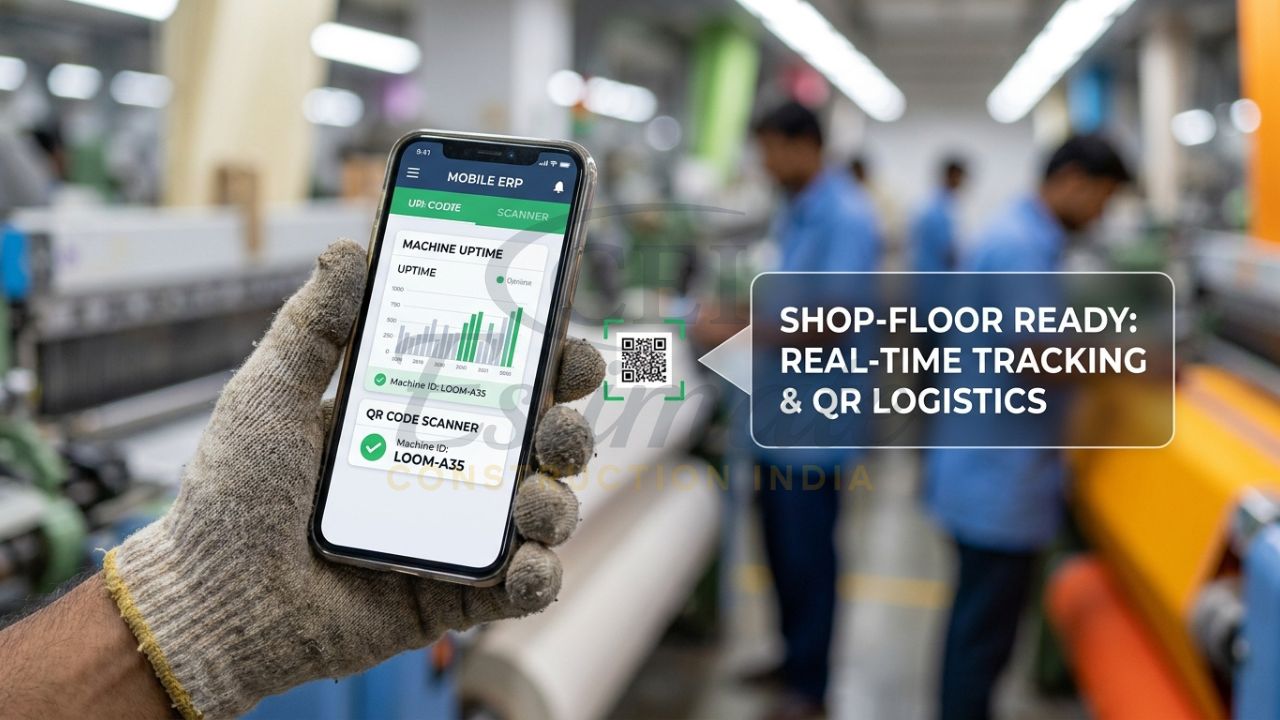
👉 Find the Perfect ERP Solution – Manage Inventory, Orders & Production Planning Efficiently!
- Bill of Materials (BOM): Multi-level BOM support is critical for complex assemblies, ensuring every nut and bolt is accounted for during the production run.
- Production Planning & Scheduling (PPS): Tools to manage machine capacity, labor shifts, and material availability to create realistic production timelines.
- Inventory & Warehouse Management: Real-time tracking of raw materials, consumables, and finished goods across multiple Godowns using RFID or QR codes.
- Quality Control & Traceability: Integrated inspection checkpoints and the ability to trace a finished product back to its specific batch of raw materials—essential for export compliance.
- Machine & Maintenance Management: Tracking machine hours and scheduling preventive maintenance to avoid expensive mid-shift failures.
- GST & TDS Automation: Native support for GSTR-1, GSTR-3B filing, and automated labor TDS deductions tailored for Indian tax laws.
- Supply Chain & Procurement: Vendor portals for easy RFQ management and automated purchase orders based on reorder levels.
- Multi-Plant Support: Centralized control for firms operating units in different industrial zones or states.
- Tally Integration: Since most Indian accountants rely on Tally, a seamless data bridge is vital to avoid double data entry.
- Advanced Analytics & Reporting: Visual S-curves, production health dashboards, and AI-driven demand forecasting.
Top 10 ERP Software for Manufacturing Industry in India 2026
1. Ramco ERP
Ramco ERP is an Indian-origin global powerhouse known for its high technical sophistication and AI-driven risk prediction capabilities. It is one of the few platforms that competes with global giants while being deeply rooted in Indian statutory compliance.
- Key Features: Facial recognition for labor attendance, AI-driven risk alerts for production delays, and end-to-end supply chain automation.
- Pros:
- Unmatched labor and HCM tracking to manage large migrant workforces.
- Strong focus on Indian GST and complex statutory requirements.
- Cons:
- Implementation can be resource-intensive and long.
- Higher entry cost compared to mid-market SaaS tools.
- Pricing: Custom enterprise quotes; typically starts from ₹5 Lakhs to ₹15 Lakhs+ depending on modules.
- Best Suited For: Large manufacturing conglomerates and capital-intensive infrastructure companies.
- Official Website: Ramco ERP
2. SAP S/4HANA
SAP is the “gold standard” for enterprise-grade reporting and is the go-to choice for companies planning for an IPO or seeking global investment. Its manufacturing module is incredibly deep, covering every possible scenario from discrete to process manufacturing.
- Key Features: Robust financial consolidation, deep audit trails, and the “Best Practices” library for manufacturing workflows.
- Pros:
- Impeccable data security and global standard compliance.
- Highly scalable as the business grows into multi-country operations.
- Cons:
- High implementation and licensing costs.
- Requires a highly disciplined workforce for data entry.
- Pricing: Enterprise-level; typically ₹20 Lakhs to ₹75 Lakhs+ depending on users and hosting.
- Best Suited For: Large enterprises, multi-state manufacturers, and firms ready for institutional funding.
- Official Website: SAP S/4HANA
3. Oracle NetSuite / Oracle Fusion
Oracle offers two distinct paths: NetSuite for fast-growing mid-market firms and Fusion for large enterprises. Both are cloud-native, offering exceptional flexibility for the modern manufacturer.
- Key Features: Real-time global visibility, advanced demand planning, and integrated e-commerce capabilities.
- Pros:
- No on-premise server maintenance required (100% Cloud).
- Excellent for manufacturers who also handle direct-to-consumer (D2C) sales.
- Cons:
- Pricing is in USD, which can fluctuate with exchange rates.
- Often requires third-party consultants for deep Indian localization.
- Pricing: Starts around ₹10 Lakhs/year; typically custom based on user count and modules.
- Best Suited For: High-growth startups, tech-savvy mid-sized firms, and export-oriented manufacturers.
- Official Website: Oracle India
4. Microsoft Dynamics 365
Dynamics 365 Business Central is the choice for firms already integrated into the Microsoft ecosystem, offering a familiar UI and seamless integration with Excel and Power BI.
- Key Features: Resource planning, detailed job costing, and AI-driven insights via Microsoft Copilot.
- Pros:
- Very high user adoption due to the familiar Windows-like interface.
- Easy integration with Outlook, Teams, and MS Project.
- Cons:
- Standard version often requires add-ons for specific Indian manufacturing needs.
- Pricing: Mid-range; starting from ₹4 Lakhs to ₹10 Lakhs setup + monthly user fees.
- Best Suited For: Growing MSME manufacturers and mid-sized developers seeking a scalable, modern UI.
- Official Website: Microsoft Dynamics 365
5. In4Suite (In4Velocity)
While primarily known in the real estate sector, In4Suite has powerful modules for manufacturers involved in project-based production, such as pre-cast or heavy engineering components.
- Key Features: Native RERA and GST compliance dashboards, lead-to-delivery tracking, and milestone-based billing.
- Pros:
- Specifically engineered for Indian compliance and the “pay-as-you-grow” model.
- Strong focus on post-production management and facilities.
- Cons:
- Less specialized for high-volume discrete manufacturing (e.g., FMCG).
- Pricing: Setup typically ranges from ₹10 Lakhs to ₹30 Lakhs.
- Best Suited For: Manufacturers in the construction supply chain, pre-fab units, and real estate developers.
- Official Website: In4Velocity
6. ERPNext (Manufacturing Module)
ERPNext is an Indian-born open-source giant, ideal for firms that want total control over their source code without recurring heavy licensing fees.
- Key Features: Native Indian GST support, multi-level BOM, job cards, and robust project accounting.
- Pros:
- Zero licensing fees for self-hosted versions.
- Extremely customizable for local material units and specific factory workflows.
- Cons:
- Requires internal IT expertise or a reliable partner for setup and maintenance.
- Pricing: Affordable; implementation ranges from ₹1 Lakh to ₹4 Lakhs.
- Best Suited For: Tech-savvy SMBs, small factories, and contractors with internal IT teams.
- Official Website: ERPNext
7. Focus Softnet ERP
Focus Softnet has a strong presence in the Indian mid-market, offering modular ERP solutions that bridge the gap between simple accounting and complex enterprise suites.
- Key Features: AI-enabled ERP with voice commands, integrated CRM, and strong inventory control modules.
- Pros:
- Good balance between features and cost.
- Strong local support network across major Indian cities.
- Cons:
- Mobile app experience can be inconsistent compared to cloud-native giants.
- Pricing: Typically starts from ₹3 Lakhs to ₹8 Lakhs for initial modules.
- Best Suited For: Mid-sized manufacturing units in the engineering and chemical sectors.
- Official Website: Focus Softnet
8. Marg ERP
Marg is the undisputed leader for small-scale Indian manufacturers, especially in pharmaceuticals and FMCG, who need simple yet powerful inventory and GST management.
- Key Features: Unmatched GST filing ease, localized inventory tracking, and chemist-specific modules.
- Pros:
- Extremely easy to use; most local accountants are familiar with it.
- Low hardware requirements; runs well on basic computers.
- Cons:
- Lacks deep production planning or Industry 4.0 IoT integrations.
- Pricing: Very affordable; ranges from ₹10,000 to ₹50,000 for standard versions.
- Best Suited For: Small manufacturers, pharma distributors, and retail-heavy production units.
- Official Website: Marg ERP
9. BuildNext / biCanvas (Manufacturing)
These platforms specialize in transforming raw site and factory data into actionable Business Intelligence (BI), making them a gold standard for large-scale EPC and infra-manufacturing firms.
- Key Features: Advanced WBS tracking, IIOT integration for machine fleet management, and multi-currency support.
- Pros:
- Incredible data visualization for complex project-based manufacturing.
- Handles massive data volumes with native mobile-first speed.
- Cons:
- Steeper learning curve; requires a dedicated “IT champion” within the firm.
- Pricing: Enterprise pricing starting from ₹10 Lakhs to ₹40 Lakhs+ per year.
- Best Suited For: Large enterprise EPC firms and multi-state infrastructure component manufacturers.
- Official Website: biCanvas
10. Epicor ERP
Epicor is globally recognized for being built specifically for manufacturing, avoiding the “one size fits all” approach of other generic ERPs.
- Key Features: Detailed job costing, MES (Manufacturing Execution System) integration, and advanced supply chain management.
- Pros:
- Deeply specialized for discrete manufacturing industries.
- Very strong version control for engineering changes.
- Cons:
- Less focus on Indian-specific SMB nuances compared to local players.
- Pricing: Custom enterprise quotes; typically ₹15 Lakhs+ for Indian implementations.
- Best Suited For: Precision engineering, automotive components, and aerospace manufacturers.
- Official Website: Epicor India
👉 Upgrade to Smart ERP for Manufacturing – Manage Inventory, Procurement & Workflows Easily!
Detailed Comparison Table
| Software | Pricing (Est. INR) | Deployment | BOM & Production Planning | GST Compliance | Best For | Indian Market Fit |
|---|---|---|---|---|---|---|
| Ramco ERP | ₹5L – ₹15L+ | Hybrid | Advanced AI-driven | Strong Native | Large Conglomerates | High |
| SAP S/4HANA | ₹20L – ₹75L+ | Hybrid | Robust / Global | Native | IPO-Ready Firms | High |
| Oracle Fusion | ₹10L+ /yr | Cloud | Advanced | Configurable | Export/D2C Firms | Moderate |
| Dynamics 365 | ₹4L – ₹10L+ | Cloud | Strong | Localized | Growing MS Users | High |
| In4Suite | ₹10L – ₹30L | Cloud | Medium-High | Native | Real Estate/Pre-fab | High |
| ERPNext | ₹1L – ₹4L | Cloud/On-Prem | Highly Customizable | Native | Tech-Savvy SMBs | Very High |
| Focus Softnet | ₹3L – ₹8L | Cloud | Good | Native | Mid-Market Engineering | High |
| Marg ERP | ₹10k – ₹50k | On-Prem | Basic | Excellent | Small Pharma/FMCG | High |
| biCanvas | ₹10L – ₹40L+ | Cloud | High (BI-Focused) | Native | Large EPC / Infra | High |
| Epicor ERP | ₹15L+ | Hybrid | Industry-Specific | Compliant | Precision Engineering | Moderate |
How to Choose the Right ERP for Your Manufacturing Business?
Selecting an ERP is like buying a machine for your shop floor—if it’s too small, it won’t handle the load; if it’s too big, you’ll waste a fortune on maintenance.
Consider these three critical factors:
- Company Size & Budget: Small firms (under ₹20 Cr turnover) should prioritize speed and mobile ease (e.g., ERPNext, Marg). Mid-sized firms need strong BOM and multi-plant dashboards.
- Industry Sector: A pharma manufacturer needs batch traceability, while an auto-component maker needs high-precision job costing. Choose a software that speaks your industry’s language.
- Local Support & Implementation: Even the best software fails without a partner who understands the Indian site reality. Ensure your vendor has a strong support team in your region.
Custom ERP Solutions for Manufacturing Industry
While off-the-shelf ERPs offer many benefits, they often struggle with the unique, sometimes “messy” workflows of an Indian factory. Generic tools are often built on Western manufacturing models and may not fully capture nuances like complex job-work cycles, multi-state labor shifts, or specific local vendor dynamics.
👉 Get All-in-One Manufacturing ERP – Manage Production, Inventory & Sales in One System!
This is where Construction Estimator India provides a decisive advantage. We offer Custom ERP Solutions for Manufacturing Industry and all types of businesses. We don’t just sell software; we design and implement fully tailored ERP systems that match your specific production workflows, inventory needs, quality standards, and business goals. Whether you need a system that integrates deeply with your unique estimation process or one that tracks real-time machine output in a Tier-3 city factory, we build it for you.
Conclusion
In 2026, a manufacturer’s competitive edge is no longer just their machinery—it is their data. Implementing the right ERP system allows you to master your costs, satisfy stringent GST/RERA-style audits, and scale your operations without losing control. From the enterprise power of SAP and Ramco to the open-source flexibility of ERPNext, there is a solution for every budget and scale.
If you need Custom ERP Software for Manufacturing Industry in India, expert consultation, or a solution built specifically for your factory and production processes, contact us via WhatsApp at +91 8630676890. Our team of experts at Construction Estimator India delivers personalized ERP systems for manufacturing companies across India, ensuring your digital transformation results in real ROI.